
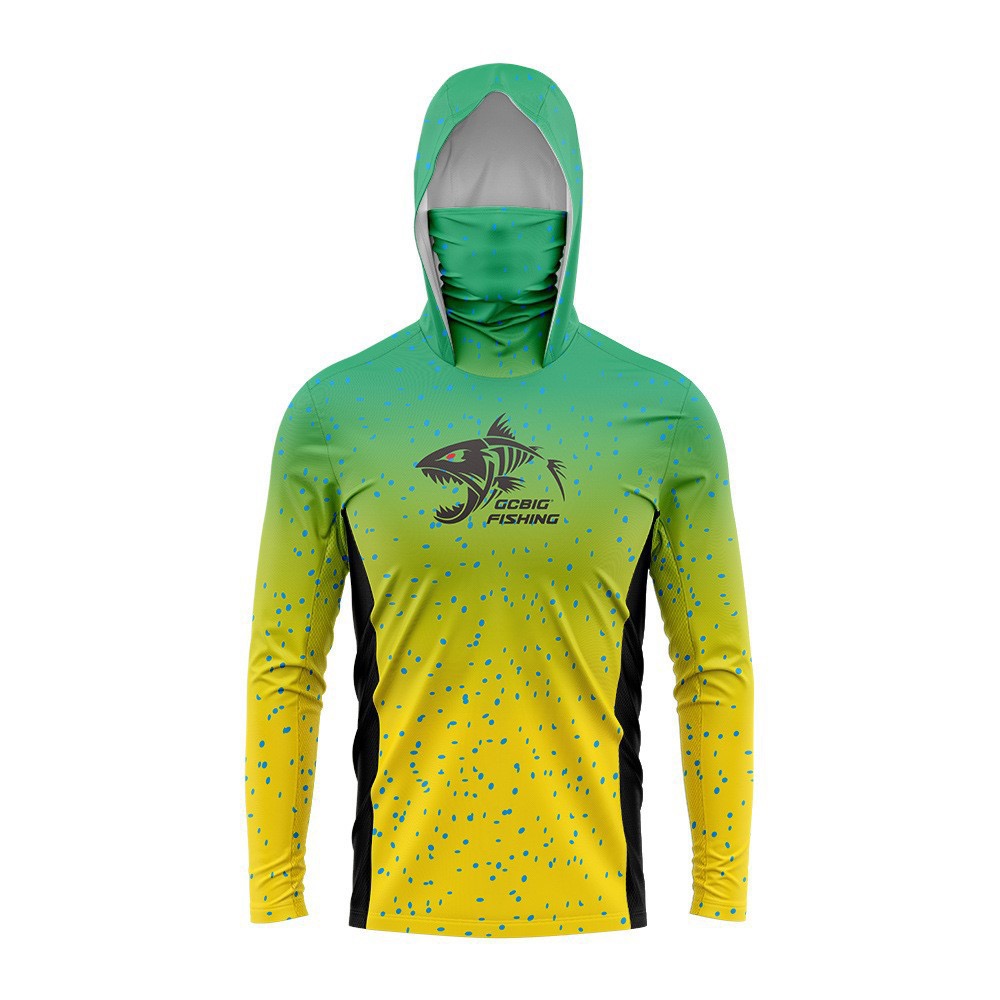
This is a very specific and technical question. It’s important to understand that it’s difficult to find official statistics on the precise percentage of polyester and spandex in all sun-protective fishing clothing. This is because:
1. Significant differences between brands and product lines: From entry-level to top-tier professional models, the formulas are completely different.
2. Different functional focuses: The fabric ratios for lightweight and breathable, heavy-duty and durable, and stretchy and slimming styles vary drastically.
3. Secret core formulas: Brands usually only label “polyester fiber” or “spandex,” without disclosing the precise blend percentage, as this is considered a fabric confidentiality.
However, based on industry practices, product technology, and functional requirements, we can summarize common percentage ranges, types, and their corresponding product positioning, which will provide more practical guidance for your purchase.
Common Sun-Protective Fishing Clothing Fabric Types and Percentages Analysis
Sun-protective fishing clothing rarely uses 100% single materials; most are blends or achieve their function through weaving techniques. Here are some mainstream types:
Type 1: High Polyester + No/Low Spandex (Focusing on durability, sun protection, and cost-effectiveness)
• Common proportions: 92% – 100% polyester, 0% – 8% spandex (or no spandex).
• Features and products:
◦ Entry-level and mainstream basic styles: Mostly use 100% polyester plain weave or checkered weave. Low cost, UV resistant (polyester itself has strong UV resistance), quick-drying, and not easily deformed, but the fabric is relatively stiff, and elasticity mainly depends on the cut rather than the fabric itself. There may be friction noise during activity.
◦ Mid-to-high-end durable styles: May contain a small amount of other fibers, but the spandex content is extremely low or absent. Hook resistance and abrasion resistance are improved through high yarn density and processes (such as woven fabric, thickened Oxford cloth), commonly found in sea fishing and rock fishing clothing, particularly in easily abraded areas such as shoulders, elbows, and hips.
Type Two: High Polyester + Medium-Low Spandex (Focusing on Balanced Elasticity and Performance)
• Common Proportion: 85% – 95% Polyester, 5% – 15% Spandex.
• Features and Products:
◦ Currently the most mainstream and classic formula for mid-to-high-end fishing apparel. While maintaining the core advantages of polyester such as sun protection, quick-drying, durability, and cost control, it adds spandex to achieve excellent four-way stretch.
◦ Significantly improved wearing experience, greater freedom of movement, and a body-hugging fit that reduces friction, suitable for lure fishing, fly fishing, and light sea fishing that require frequent casting and rod handling.
◦ The spandex proportion is usually around 10%, achieving the best balance between elasticity, durability, and cost. Many well-known brands (such as SHIMANO and DAIWA) use this formula in their best-selling models.
Type 3: Low Polyester + High Spandex or Other Blends (Focusing on Ultimate Comfort and Fit)
• Common Proportion: 70% – 85% Polyester, 15% – 30% Spandex, or blends with nylon, etc.
• Features and Products:
◦ High-end/competitive, fashion-forward casual fishing apparel. Possesses exceptional elasticity and a close fit, feeling like a “second skin,” with virtually no restriction during exercise.
◦ However, a high spandex proportion leads to increased costs, relatively lower abrasion resistance and snag resistance, and a slight compromise in UPF (due to the thinner and more stretchy fabric). This is usually compensated for by high-density weaving or other coating technologies.
◦ These products are targeted at professional athletes seeking the ultimate athletic experience or users with extremely high comfort requirements.
Type 4: Functional Blends (Special Treatment)
• Common Proportion: Polyester remains the main component (>80%), spandex proportion varies, but other ingredients are added.
• Features and Products:
◦ Added Moisture-wicking/Cooling Agents: Minerals or special polymers are added during polyester spinning to achieve a cooling sensation upon contact and rapid heat conduction. These products are a popular choice for summer fishing apparel.
◦ Blended with Cotton, etc.: Some casual fishing shirts use a “polyester-cotton + spandex” blend to improve the feel, but sacrifice the quick-drying and lightweight properties of pure polyester, making them unsuitable for high-intensity or easily wet environments.
——
Core Purchasing Advice: How to Understand Labels and Choose?
You don’t need to memorize specific numbers, but you can choose based on the following logic:
1. Choose the type based on the intended use:
◦ High-intensity, competitive environments (rocks, bushes, boat equipment) → Prioritize Type 1, focusing on fabric thickness and weave density, with elasticity being secondary.
◦ General purpose, sport fishing (lug fishing, general use) → Prefer Type 2 (e.g., 90% polyester + 10% spandex) for the best balance.
◦ For competitive wear, applications requiring extremely high flexibility, or as a close-fitting mid-layer → Type 3 can be considered, but its relatively lower abrasion resistance must be accepted.
2. Look at label keywords:
◦ “Four-way stretch”: Almost certainly contains spandex, usually at a level of 8% or higher.
◦ “Woven,” “Oxford,” “Extra-thick and abrasion-resistant”: May contain little or no spandex, offering limited elasticity but durability.
◦ “Lightweight,” “Soft to the touch,” “Athletic cut”: Likely to contain a moderate to high proportion of spandex.
3. More important than parameters:
◦ UPF value: Always confirm UPF 40+ or 50+, this is the minimum requirement for sun-protective clothing. High-density polyester weave itself provides a good foundation.
◦ Weave technique: Tight weaves are more effective at sun protection and snag resistance than loose weaves.
◦ Fit and Cut: Good three-dimensional tailoring (such as three-dimensional stitching at the armpits and elbows) can compensate for insufficient fabric elasticity and provide room for movement.
Conclusion:
While precise market share data is unavailable, it is certain that blended fabrics of “high polyester (85%-95%) + medium-low spandex (5%-15%)” have become the absolute mainstream and “sweet spot” formula for mid-to-high-end sun-protective fishing clothing due to their perfect balance of performance, comfort, and cost. When purchasing, you should pay more attention to specific UPF values, weave density, abrasion resistance treatments, and actual wearability, rather than simply focusing on percentage figures.
Leave A Comment