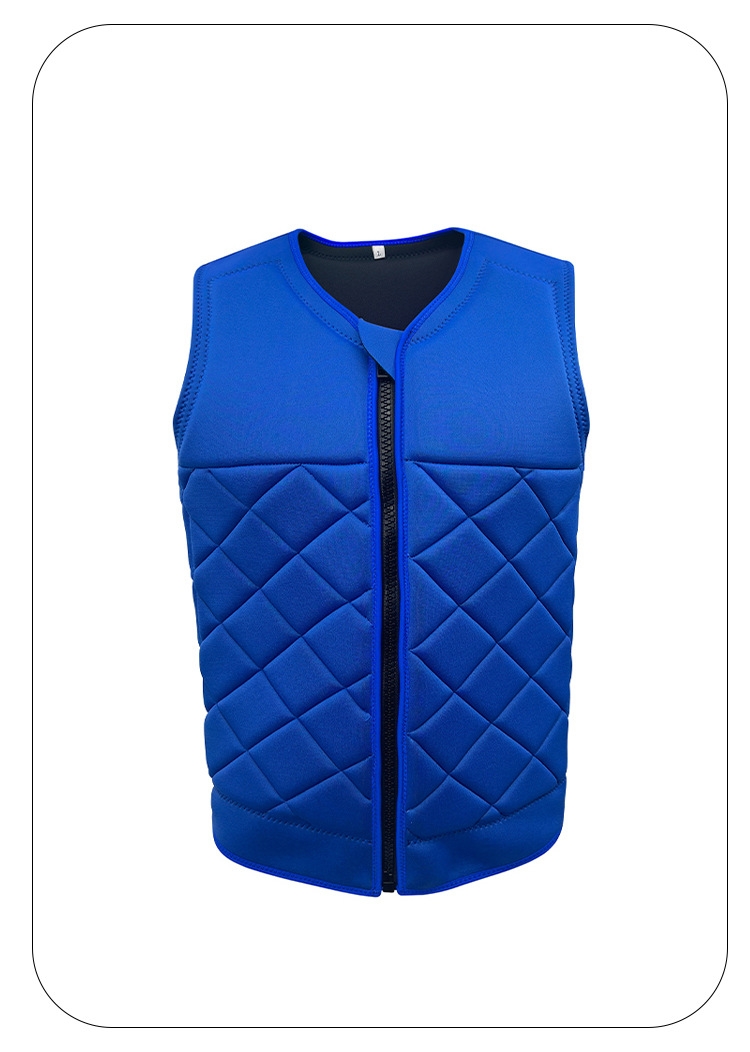
Age restrictions for using PVC foam life jackets in water sports vary by country, activity, and regulatory standards, but they are generally governed by buoyancy requirements and safety guidelines rather than explicit age limits. Here’s a detailed breakdown of how age factors into their use:
1. General Regulatory Framework
Most regulations focus on buoyancy capacity and vest sizing for different user groups (children, adults, etc.) rather than banning PVC foam for specific ages. Key points include:
a. Buoyancy Requirements by User Weight
Children (typically under 50 kg / 110 lbs):
Require life jackets with lower minimum buoyancy (e.g., 50N for infants, 70N for older children) to ensure proper flotation without restricting movement .
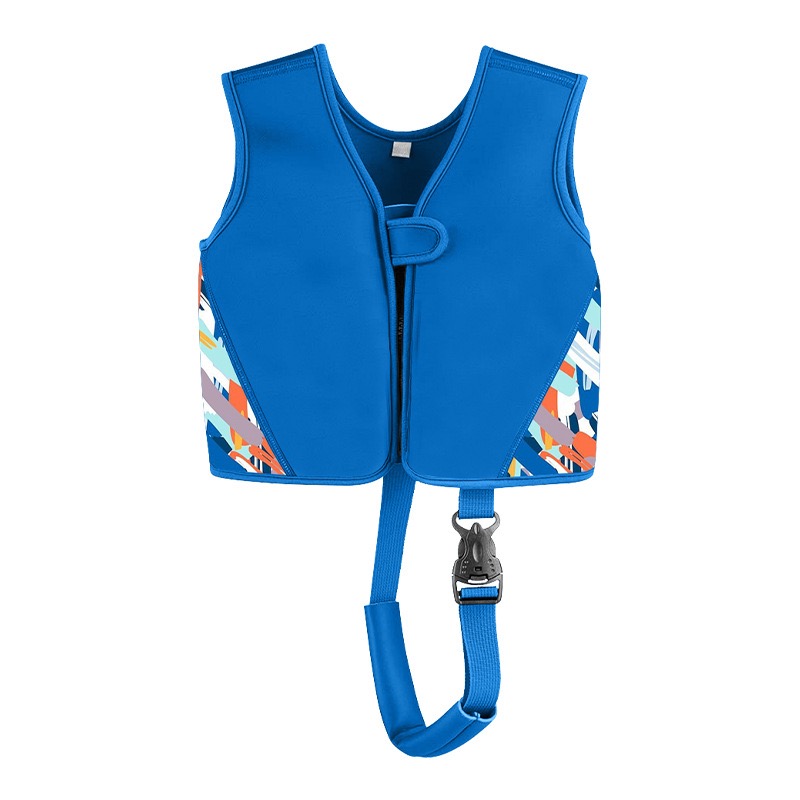
PVC foam vests are often used for children due to their affordability and durability, but they must be sized appropriately (e.g., toddler-specific designs with crotch straps) .
Adults (50 kg+):
Require vests with ≥70N buoyancy (USCG Type III) or higher, depending on water conditions (e.g., offshore vs. inland) .
b. Sizing and Fit Regulations
Many countries mandate that life jackets must be labeled with weight ranges (e.g., “for users 20–30 kg” or “adult 80+ kg”) to ensure proper fit .
For example:
In the U.S., USCG-approved vests for children under 30 lbs must have grab handles and crotch straps to prevent slippage .
The EU’s EN 393 standard for children’s life jackets requires quick-release buckles and adjustable straps for ages 1–16 .
2. Activity-Specific Age Guidelines
While no global “age bans” exist for PVC foam, some activities have implicit age restrictions based on safety risks and vest suitability:
a. High-Risk Sports (e.g., Kite Surfing, Jetskiing)
Children under 12–14:
Often required to wear higher-buoyancy vests (e.g., 100N or 150N) with impact protection, which may include PVC foam designs .
Instructors or parents must supervise, and vests must have neon colors or reflective strips for visibility .
Adolescents and adults:
Can use lower-buoyancy PVC foam vests (e.g., 50N impact vests) for advanced kite surfing, but only if they have demonstrated swimming proficiency .
b. Recreational Boating and Paddle Sports
Children under 13 (U.S. Federal Law):
Must wear USCG-approved life jackets (including PVC foam) at all times on moving boats, regardless of the vest type .
States like California or Texas may impose stricter rules (e.g., no age exemptions for open-water activities) .
Older adults:
No age restrictions, but vests must accommodate mobility needs (e.g., easy-to-fasten buckles for arthritis) .
c. Commercial and Guided Tours
Youth programs (e.g., summer camps):
Children under 18 must use vests labeled for their weight class, with PVC foam being a common choice for durability .
Instructors may prefer PVC foam over inflatable vests for kids due to lower maintenance and fewer inflation-related risks .
3. Regional and National Variations
a. United States
Federal rules: No explicit age limits for PVC foam, but children’s vests must meet USCG sizing standards (e.g., “Child” for 30–50 lbs, “Youth” for 50–90 lbs) .
State laws:
Florida: Children under 6 must wear life jackets at all times on boats under 26 feet, even if the vest is PVC foam .
Hawaii: Requires all users of personal watercraft (regardless of age) to wear USCG-approved vests (PVC foam is permitted) .
b. European Union
EN 393 standards: Classify vests by weight range (e.g., “Group 0” for <10 kg, “Group 5” for >90 kg) rather than age .
Country-specific rules:
France: For sailing schools, children under 12 must use vests with grab loops and quick-release buckles (PVC foam is allowed if compliant) .
Sweden: Mandates that all children under 15 wear life jackets in open water, with no material restrictions (PVC foam is common) .
c. Australia and New Zealand
ASTM F1546 standards: Require vests for children under 12 to have rear flotation panels to keep them face-up in water; PVC foam meets this requirement .
Western Australia: Prohibits children under 5 from using inflatable vests alone, making PVC foam the default for young swimmers .
4. Safety Considerations for Specific Age Groups
a. Infants and Toddlers (<3 Years)
PVC foam use: Allowed if the vest is specifically designed for infants (e.g., high-collared to support the head, crotch straps) .
Alternative materials: Some parents prefer neoprene for warmth in cold water, but PVC foam is widely used in pool and beach settings .
b. Older Adults
Mobility concerns: PVC foam vests with adjustable straps and lightweight foam (e.g., cross-linked polyethylene) are preferred over heavy inflatable models .
Health considerations: Individuals with back pain may need vests with ergonomic padding, which some PVC foam designs offer .
c. Teenagers in Extreme Sports
Impact vests: PVC foam is commonly used in kite surfing or wakeboarding for teens due to its shock absorption, even though it has lower buoyancy than inflatable vests .
Supervision: Many venues require teens under 16 to use 100N buoyancy vests (PVC foam or inflatable) for unsupervised sessions .
5. Exceptions and Alternatives
Inflatable vests for older children: Some activities (e.g., competitive swimming) allow inflatable vests for ages 12+ due to their lower profile, but these are not suitable for non-swimmers .
Regulatory trends: No major regions ban PVC foam for any age, but some eco-conscious brands are shifting to recyclable EPE foam for children’s vests to reduce plastic waste .
Conclusion
There are no universal age restrictions on using PVC foam life jackets in water sports. Instead, regulations focus on buoyancy, sizing, and fit for different weight classes, with implicit age guidelines tied to activity risks and supervision requirements. Always:
Check local laws (e.g., state/provincial rules in addition to national standards).
Use vests labeled for the user’s weight and activity level (e.g., “Child 20–30 kg” or “Offshore Adult”).
Prioritize proper fit over material type, especially for children and vulnerable users.
For high-risk activities or young children, prioritize vests with additional safety features (e.g., grab handles, reflective strips), whether made of PVC foam or alternative materials.

Leave A Comment