
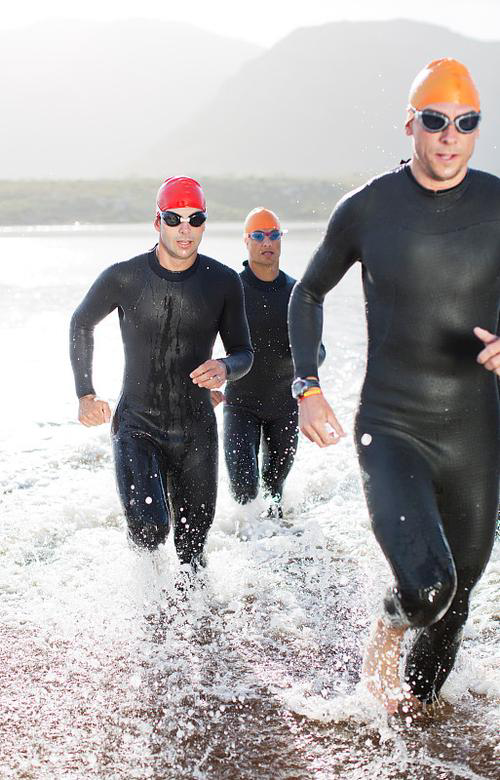
Triathlon wetsuits and traditional diving suits are both designed to help you stay comfortable and safe in the water, but they have distinct differences based on their intended use. Here’s a breakdown of the key differences:
1. Purpose and Design Focus
- Triathlon Wetsuits:
- Purpose: Primarily designed for swimming in triathlons. They focus on speed, buoyancy, and flexibility to help athletes perform well in a race.
- Design Focus: Built to help you move through the water efficiently. The focus is on minimizing drag, maximizing buoyancy, and enhancing comfort for long-distance swimming. They are made to reduce resistance while swimming, which is essential for race performance.
- Diving Suits (e.g., Scuba or Freediving Wetsuits):
- Purpose: Designed for underwater exploration at various depths. The primary goal is thermal insulation and protection from cold water, as well as providing buoyancy control and safety in deeper dives.
- Design Focus: Focuses on thermal protection, durability, and the ability to withstand pressure at depth. Diving suits are thicker, have more padding, and are often made from materials that provide greater insulation against cold water.
2. Material
- Triathlon Wetsuits:
- Typically made from smoothskin neoprene (also known as “glide skin”) to reduce drag and increase speed through the water.
- They have varying thicknesses, with thinner material around the shoulders and arms for greater flexibility and thicker material around the torso and legs for buoyancy.
- Stretchability and lightweight design are key characteristics to optimize movement for swimming.
- Diving Suits:
- Made from standard neoprene (usually with a higher density) or compressed neoprene. These suits are designed to insulate you in cold waters.
- They tend to be thicker throughout, offering more padding and less stretch than triathlon suits, as they focus on protecting the body from cold temperatures and pressure at depth.
- Some diving suits, like dry suits, keep water out entirely, unlike wetsuits, which allow a thin layer of water between the suit and skin to keep you warm.
3. Thickness
- Triathlon Wetsuits:
- Typically have varying thicknesses ranging from 1.5mm to 5mm, depending on the water temperature and the part of the body they cover.
- Thinner around the shoulders, arms, and legs (for flexibility), and thicker around the torso (for buoyancy and warmth).
- Diving Suits:
- Thicker suits are used for deeper and colder water, ranging from 3mm to 7mm or more.
- The thickness is designed to keep divers warm in cold water and also to provide buoyancy control at depth.
4. Flexibility and Mobility
- Triathlon Wetsuits:
- Designed for maximum flexibility in the arms and shoulders. The material around the upper body is usually thinner and more stretchy to allow for easy and efficient swimming strokes.
- Minimal buoyancy in the arms and legs to avoid restricting movement.
- Diving Suits:
- Generally less flexible than triathlon suits due to thicker material, though some high-end dive suits (especially freediving suits) are designed to be quite flexible.
- More buoyant overall to help with floatation and neutral buoyancy underwater, but this can restrict movement compared to triathlon wetsuits.
5. Neck, Zippers, and Design
- Triathlon Wetsuits:
- Open-neck designs to reduce drag. Some may have a short zipper or be entirely zipper-free to avoid water entry and minimize resistance.
- The design is focused on ease of removal for quick transitions during the race.
- Diving Suits:
- Sealed necklines (to reduce water leakage) and often full-length zippers for ease of wearing and removal. Some diving suits also have skin-tight seals around the wrists and ankles to help keep water out.
- More protection around areas like the wrists and ankles to keep warm water from entering and to help maintain buoyancy.
6. Buoyancy
- Triathlon Wetsuits:
- Focus on providing buoyancy in the lower body (legs and hips) to keep the swimmer streamlined and in a good swimming posture.
- The goal is to help the swimmer maintain an optimal body position in the water, allowing them to swim faster and with less energy expenditure.
- Diving Suits:
- Designed to allow for greater control over buoyancy. Buoyancy changes with depth, and divers need to adjust for neutral buoyancy using a buoyancy control device (BCD) or by managing weight.
- More buoyancy throughout the suit to help with flotation in cold water or while at depth, but this can vary based on suit thickness and type (e.g., wet suits vs. dry suits).
7. Waterproofing and Insulation
- Triathlon Wetsuits:
- Primarily designed to keep you warm in mild to moderately cold water. The suit will allow some water to enter, but the idea is to trap a thin layer between the suit and skin to insulate the body. They aren’t fully designed to be watertight like dive suits.
- Diving Suits:
- Designed to keep you warm in colder conditions, and some diving suits are watertight to avoid water intrusion. This is especially true for dry suits, which are used in much colder environments and keep water from entering entirely.
8. Price and Durability
- Triathlon Wetsuits:
- Generally lighter, thinner, and less durable than dive suits, as they’re used for more athletic, race-focused activities.
- Cost: Can range from moderate to expensive depending on brand and materials, but generally not as expensive as high-end diving suits.
- Diving Suits:
- More durable, designed to withstand frequent use in potentially harsh underwater environments.
- Cost: Diving suits, especially high-quality wetsuits or dry suits, can be quite expensive, especially if they’re designed for deep-water or extreme conditions.
Summary:
- Triathlon Wetsuits: Designed for speed and buoyancy in swimming. Lightweight, flexible, and thin around the shoulders for efficiency in races.
- Diving Suits: Designed for insulation, buoyancy control, and protection in colder, deeper waters. They are thicker, less flexible, and often bulkier for safety and comfort underwater.
The main difference boils down to performance in swimming vs. protection and comfort underwater, with triathlon wetsuits geared towards speed and buoyancy for races, and diving suits designed to withstand pressure, cold temperatures, and the specific needs of underwater exploration.

Leave A Comment