
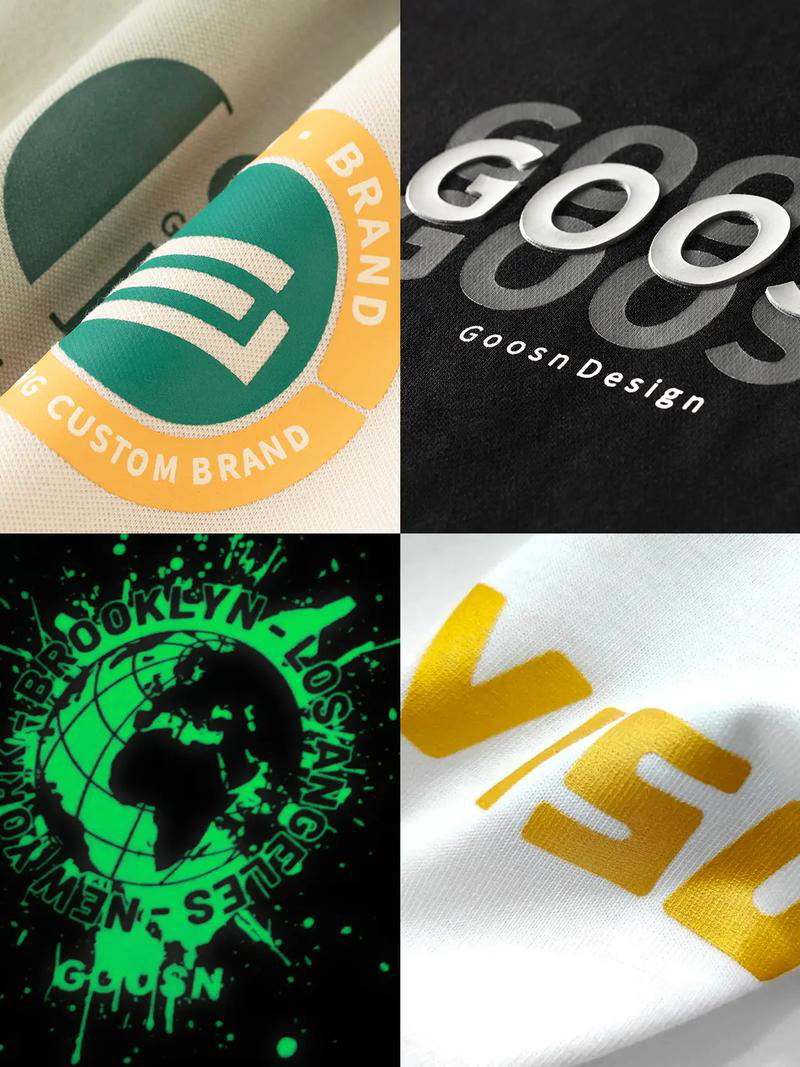
There are various types of logo printing for diving suits. Different processes are suitable for different materials, design requirements and usage scenarios. The following are some common ones:
- Screen Printing
Principle: The ink is leaked onto the surface of the fabric through the screen to form a pattern.
Features:
Bright colors: suitable for simple single-color or multi-color patterns with high color saturation.
Low cost: suitable for mass production, and the cost-effectiveness is high after the initial plate-making costs are shared.
Medium durability: washable, but frequent friction may cause slight detachment of the edges.
Applicable scenarios: ordinary diving suits, short-term use or customized needs with limited budget.
- Heat Transfer Printing
Principle: The pattern is first printed on the transfer paper, and then transferred to the fabric through high-temperature pressing.
Features:
Clear details: gradient, complex patterns and multi-color transitions can be achieved, which is close to the effect of digital printing.
Thin feel: The pattern fits tightly to the fabric and is more comfortable to wear.
Good water resistance: suitable for diving suits that are frequently washed, but may fade slightly in high temperature environments.
Applicable scenarios: high-end diving suits or small-batch customization with complex designs and visual effects.
- Digital Printing
Principle: Use a digital printer to directly print ink onto the surface of the fabric, similar to “inkjet printing”.
Features:
Highly customized: supports any complex pattern, photo-level effect, no plate making required, suitable for personalized design.
Good breathability: The ink penetrates into the fabric fiber, there is no obvious coating on the surface, and does not affect the elasticity of the diving suit.
High cost: suitable for small batch or single-piece customization, and the cost is slightly higher than screen printing when mass production.
Applicable scenarios: high-end customization, brand promotion models or diving suits that need to change designs frequently.
- Embroidery
Principle: Use a sewing machine to embroider silk thread directly on the surface of the fabric to form a three-dimensional pattern.
Features:
High-quality texture: outstanding three-dimensional effect, wear-resistant and washable, not easy to damage after long-term use.
Limited elasticity: The elasticity of the fabric in the embroidery area is slightly low, and it should be avoided in active parts such as joints.
High cost: It takes a long time to embroider complex patterns, and it is suitable for small-area logos.
Applicable scenarios: high-end brand diving suits, professional equipment that needs to be used for a long time.
- Hot stamping
Principle: The metal foil is stamped onto the surface of the fabric at high temperature to form a metallic logo.
Features:
Strong visual impact: The metal texture enhances the high-end sense of the brand, suitable for nighttime or special scene identification.
General durability: The edges are easy to fall off due to friction, and it is not suitable for parts that are frequently scratched.
Applicable scenarios: limited edition, promotional diving suits or temporary event promotions.
- Silicone printing
Principle: The silicone slurry is screen-printed onto the fabric to form a raised three-dimensional pattern.
Features:
Anti-slip and wear-resistant: The silicone layer can increase friction (such as the cuffs and collars of diving suits) and improve the texture at the same time.
Good elasticity: Silicone itself is elastic and suitable for highly stretchable neoprene fabrics.
High cost: Special silicone slurry is required, and the process is complicated.
Applicable scenarios: functional areas of professional diving suits (such as brand logo + anti-slip design).
- Laser Engraving
Principle: The surface of the fabric is burned by laser to form a hollow or discolored logo (only applicable to some materials, such as neoprene).
Features:
Strong permanence: directly change the fabric structure, cannot fall off, suitable for high-end customization.
Design restrictions: can only present a single color (usually the base color of the fabric or the color after burning), suitable for simple lines.
Applicable scenarios: high-end neoprene diving suits, pursuing unique texture and permanent logo.
Selection suggestions:
Budget and batch:
Large batch and low cost → screen printing or thermal transfer.
Small batch / personalized → digital direct printing or laser engraving.
Functional requirements:
Anti-slip, wear-resistant → silicone printing or embroidery.
Waterproof, washable → thermal transfer or digital direct printing.
Brand positioning:
High-end texture → embroidery, laser engraving or hot stamping.
Young trend → Digital direct printing (supports bright colors and creative designs).
It is recommended to test the effect of the sample first and then determine the process according to the material of the diving suit (such as neoprene, nylon, etc.) and the actual use scenario.

Leave A Comment