
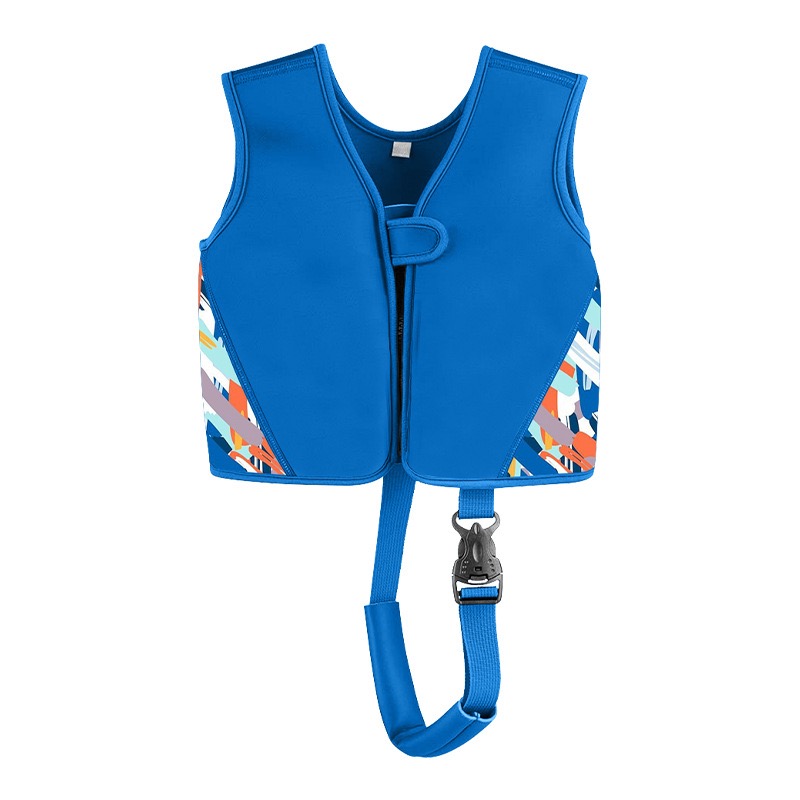
This is a very important and common question. The simple and direct answer is: Yes, drowning can still occur even while wearing a life jacket (note that the correct spelling is “life jacket,” meaning life-saving).
Life jackets are the most important safety equipment for water activities, greatly increasing the chances of survival, but they are not an absolute guarantee of safety. The risk of drowning decreases from a “high-probability event” to a “low-probability event,” but this low-probability event is usually related to the following factors:
Main reasons why drowning can still occur while wearing a life jacket:
1. Inadequate or improperly worn life jacket
◦ Incorrect size: For example, using a regular casual life jacket with insufficient buoyancy in a fast-flowing river or at sea.
◦ Not properly fastened: The life jacket is too loose. When a person falls into the water, especially when unconscious, a loose life jacket may slip off the shoulders, or the face may not be able to stay upward, leading to choking on water.
◦ Unregulated “Toys”: Some buoyancy vests or toys that resemble life jackets do not meet safety standards for buoyancy.
2. Harsh Water Environments
◦ Turbulent Currents and Whirlpools: Strong currents can pull people underwater, trap them under rocks or obstacles, making escape difficult even with buoyancy.
◦ Rip Currents: Fast and powerful, these can quickly carry people away from the shore, leading to exhaustion and panic.
◦ Extremely Low Water Temperatures: Rapidly causes hypothermia, resulting in loss of bodily functions, confusion (hypothermia coma), and ultimately, drowning.
3. Individual’s Condition
◦ Panic: Violent struggling and panic after falling into the water can cause loss of balance, making it difficult to keep the mouth and nose above water, leading to choking.
◦ Injuries or Illnesses: Impact during fall into the water can cause unconsciousness, heart attacks, seizures, etc., resulting in loss of self-control, and the face may be submerged in water.
◦ Alcohol or drug effects: Severely impairs judgment, coordination, and thermoregulation, greatly increasing risk.
4. Other external risks
◦ Impact from objects: Falling into the water while rafting in rapids or near a boat may result in being knocked unconscious by impacts from boats, logs, or other hard objects.
◦ Trapped or entangled: Fishing lines, seaweed, ropes, etc., may become entangled in the body or life jacket, preventing buoyancy.
What is the core function of a life jacket?
The primary and most important function of a life jacket is to provide buoyancy for unconscious or unable-to-swim individuals (e.g., unconscious, injured, hypothermic), automatically keeping their mouth and nose above water while awaiting rescue. It does not guarantee you will remain completely dry or move freely, but it gives you the most precious time to survive.
How to minimize risk (safety guidelines):
1. Choose the right one: Select a suitable life jacket that meets safety standards (e.g., CE, USCG certification) based on the water environment (still water, river, coastal, open sea).
2. Proper Wearing: Ensure all straps are securely fastened to prevent the life jacket from slipping off your head due to impact. A “shoulder strap pull test” can be performed—lift the shoulder straps; the life jacket should not rise above your chin.
3. Stay Alert: Avoid swimming alone, especially after consuming alcohol or medication.
4. Know Your Surroundings: Familiarize yourself with the water conditions beforehand and avoid dangerous areas (such as dams, spillways, and reefs).
5. Remain Calm: If you accidentally fall into the water, try to remain calm. Adopt a backstroke position to conserve energy. Breathe through your mouth and exhale through your nose to prevent choking on water.
6. Use in conjunction with other equipment: In complex waters, use in conjunction with a helmet, thermal clothing, whistle, signal lights, etc.
Summary:
A life jacket is a lifesaver, but not an invincible shield. It minimizes the risk of drowning, but its effectiveness depends on: a qualified product, proper wearing, a clear mind, and respect for the environment. Never enter dangerous waters beyond your capabilities or the level of protection provided by your equipment just because you are wearing a life jacket.
Leave A Comment