
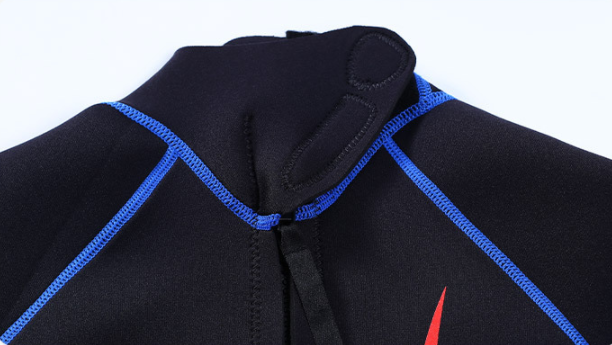
Simply put, a wetsuit is like an “insulated kettle,” while a surf suit is like a “windproof bodysuit.” Their design goals are completely different.
Below, I’ll use a core comparison table and a detailed analysis to help you thoroughly understand their differences.
I. Core Differences Overview
Features | Wetsuit | Surfsuit/Coldsuit | Other Water Sports Clothing
Primary Goal | Wetsuit | Surfsuit/Coldsuit | Primary Goal | Wetsuit | Primary Goal … Core Challenges: Diving Wetsuits: Underwater static heat conduction (body → water). Surface wind chill + evaporative cooling + instantaneous cold water impact. Other water sports clothing: Friction, joint mobility, UV protection, and warmth for specific postures.
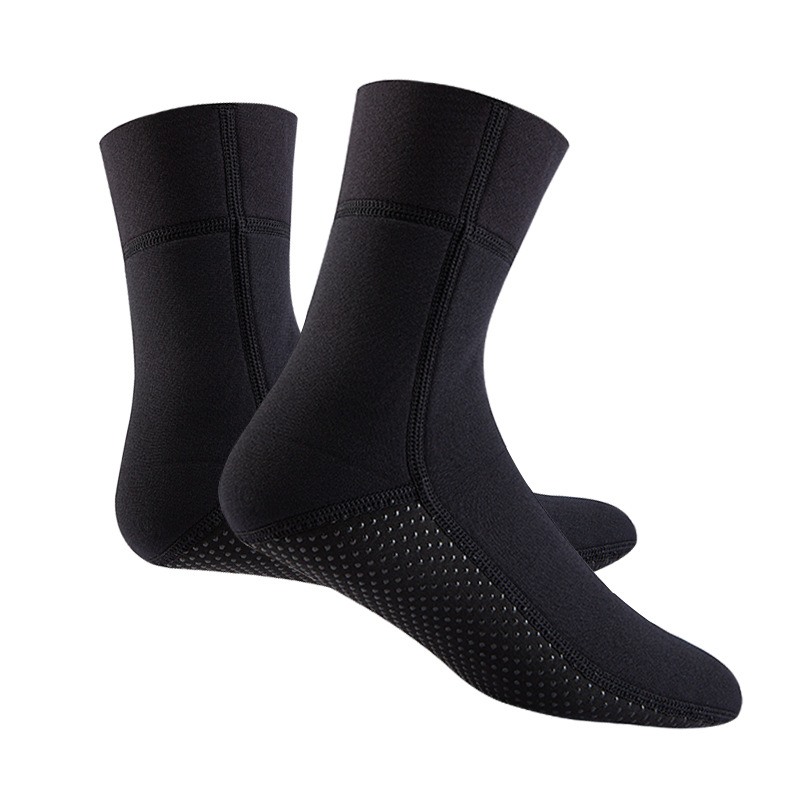
Materials and Structure: Diving Wetsuits: Foamed neoprene rubber containing numerous closed-cell air bubbles, serving as the primary insulation layer. Typically thicker (3mm-7mm+). Surfsuits/Cold-weather clothing: “Bubble-limiting” neoprene rubber or synthetic rubber, denser, with better stretch, and lighter. Typically thinner (0.5mm-4/3mm). Other water sports clothing: Primarily composite fabrics, emphasizing elasticity, lightweight, quick-drying, and UV protection.
Sewing Techniques: Diving Wetsuits: High-level use of glued blind seams/liquid-tight seams to minimize water seepage. Surfsuits/Cold-weather clothing: Mostly flat seams, allowing water to quickly enter and exit while ensuring maximum joint flexibility. Other water sports clothing: Flat seams/ultrasonic seamless bonding to reduce seam friction.
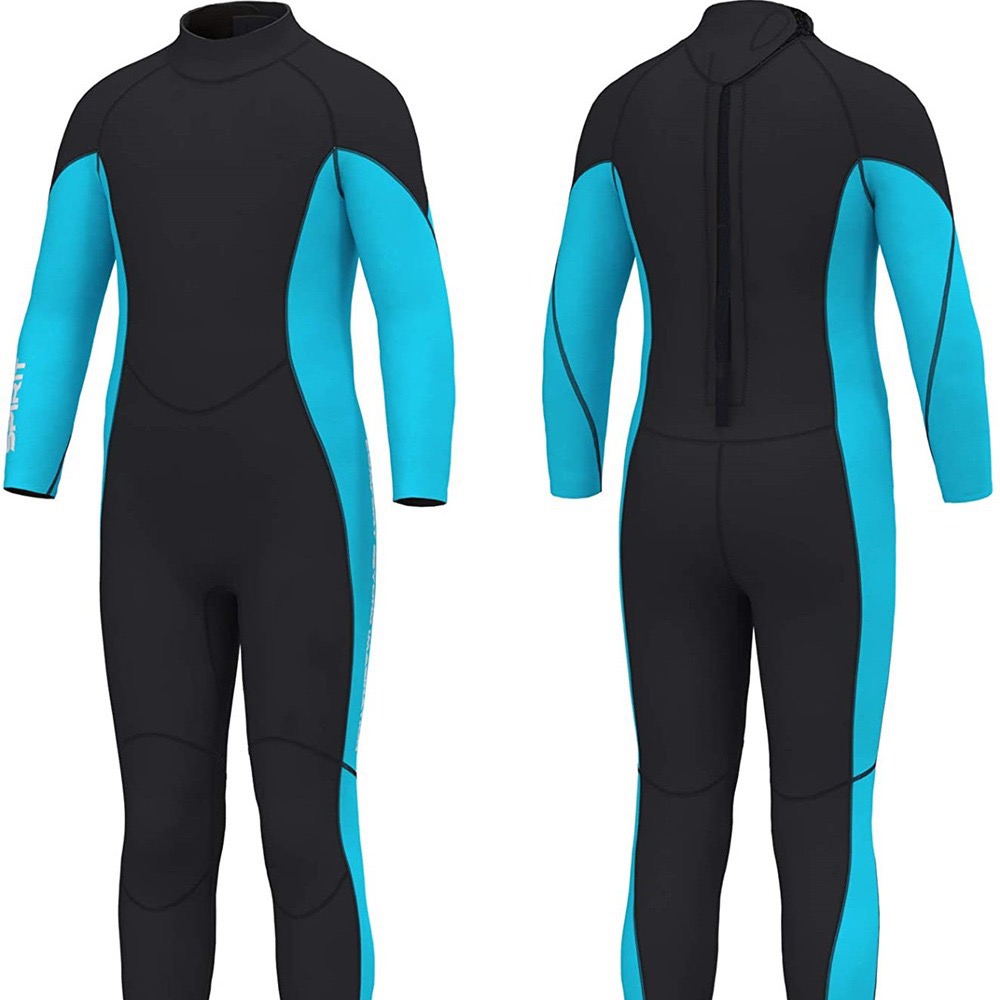
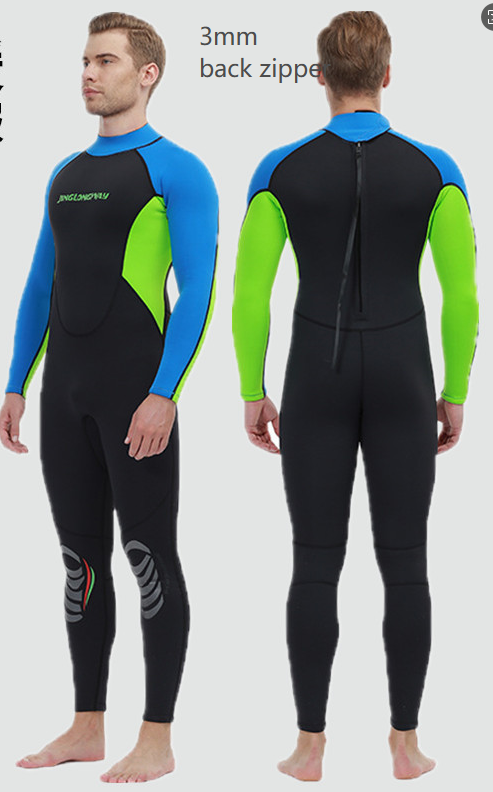
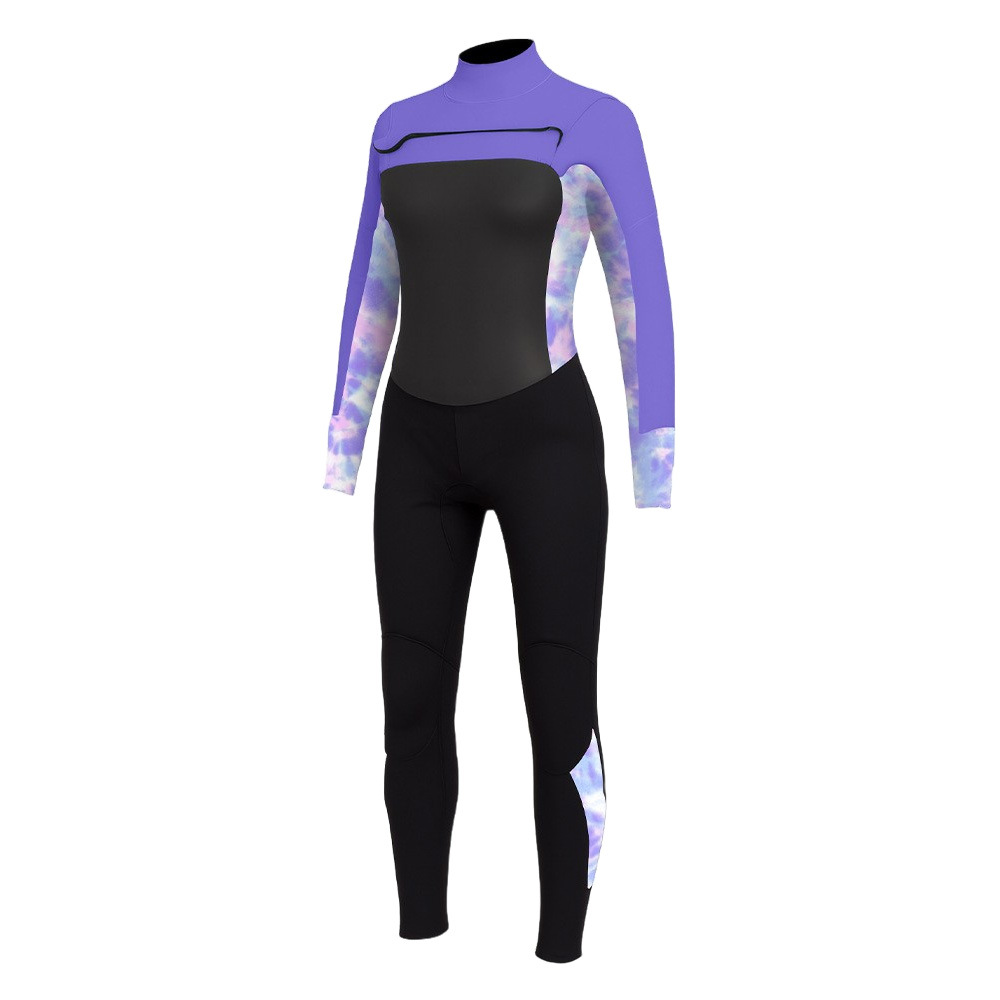
Zipper Design: Primarily long back zippers to reduce water seepage points at the front. Some use waterproof zippers on the chest. Short front zippers (for easy on and off), and zipperless pullover styles (for greater warmth and flexibility). Variety of styles, mostly high-necked pullovers or partially open at the chest to reduce water resistance and friction.
Fitness: Very close-fitting, but allows minimal water exchange. Surfsuits/Wetsuits: Extremely tight-fitting, like a “second skin” to minimize water movement inside the garment. Other Water Sports Apparel: Tight-fitting but elastic, requiring special cuts in specific areas (such as underarms and knees).
Thickness: Diving wetsuits: Thicker to provide underwater insulation. Common thicknesses: 3mm, 5mm, 7mm. Surfsuits/Wetsuits: Thinner to ensure flexibility. Common thicknesses: 2mm, 3/2mm (3mm for torso, 2mm for limbs), 4/3mm. Other water sports clothing: Extremely thin, typically 0.5mm-2mm, or even just Lycra/spandex fabric.
Additional features: Wetsuits: Focus on durability, may have thickened knee pads. Surfsuits/Coldsuits: Reinforced seams, anti-friction. Other water sports clothing: UPF 50+ sun protection, chlorine resistant, quick-drying, highly elastic, reduces friction.
——
II. Detailed Dimensional Analysis
1. Design Philosophy and Usage Environment
• Wetsuits: Designed for prolonged immersion. Divers lose body heat very quickly underwater (especially in deep water), and their movements are relatively slow. Therefore, the core principle is insulation, using air bubbles in the material to prevent heat conduction.
• Surfsuits: Designed for intermittent immersion. Surfers spend most of their time lying/sitting on the board, exposed to wind and sun. Upon entering the water, the thin clothing may let in some water, but the body quickly heats it up. After surfacing, the wet clothing combined with wind causes evaporative cooling (wind chill), which is the main way heat is lost. Therefore, surfing suits prioritize windproofing and quick wicking away of surface moisture.
• Other water sports apparel (e.g., stand-up paddleboarding, kayaking, triathlon, jet skiing):
◦ Stand-up paddleboarding/kayaking: With the upper body primarily in the water, sun protection and friction protection are crucial, focusing on trunk sun protection and joint flexibility.
◦ Triathlon: Requires a rapid transition from swimming to cycling/running, so it must be extremely lightweight, quick-drying, highly elastic, and friction-reducing. The swimming portion is typically thin or just a thermal swimsuit.
◦ Wakeboarding/water skiing: Emphasis is placed on flexibility and impact resistance, with more durable fabrics.
2. Fabric Technology
• Wetsuits: Traditionally, foamed neoprene is the main material due to its optimal heat-insulating bubbles. High-end models use reflective linings such as titanium and ceramic to trap radiant body heat.
• Surfsuits: Utilize denser, more elastic, and less stretchable neoprene or synthetic rubber with “bubble-limiting” technology, sacrificing some insulation for ultimate flexibility and lightweight design. Smooth surfaces reduce friction during water application.
• Other sportswear: Extensively uses composite fabrics of spandex/Lycra and polyester/nylon, offering UPF 50+ sun protection, chlorine resistance, quick-drying, and four-way stretch. Thin neoprene or fleece linings are used for higher warmth requirements.
3. Cut and Details
• Zippers:
◦ Long back zippers on wetsuits facilitate underwater donning and doffing, but can be water-permeable. Therefore, high-end wetsuits/dry suits use waterproof zippers on the chest.
◦ Short zippers or no zippers (pullover) on the chest of surfsuits prevent chest discomfort and allow for greater flexibility when paddling.
• Seams:
◦ Liquid-tight stitching on wetsuits is for insulation.
• Flat seams on surf suits are designed for ultimate flexibility, allowing for significant body twisting.
• Other sportswear extensively uses seamless/ultrasonic stitching to reduce seam friction against the skin.
• Localized thickening/abrasion resistance:
• Wetsuits have thickened knees for easier kneeling.
• Surf suits have thickened elbows, knees, and chest for abrasion protection.
• Kayaking/SUP suits have thickened hips for abrasion resistance.
——
Summary and Purchasing Recommendations
• If you primarily dive: Choose a wetsuit. It’s specifically designed for underwater insulation, and thickness is a primary consideration.
• If you primarily surf: Choose a surf wetsuit. Its flexibility, windproofness, and abrasion resistance are tailor-made for surfing.
• If you participate in paddleboarding, kayaking, open water swimming, triathlon, etc.: Choose professional sportswear/waterwear/abrasion-resistant clothing**, which are specifically optimized for sun protection, quick drying, joint mobility, and reduced friction.
Important Note:
While it’s possible to occasionally use a wetsuit for scuba diving (in warm water) or surfing (as a temporary measure), the experience will be diminished, and it may be unsafe (wetsuits restrict flexibility and hinder swimming, while thin wetsuits can lead to hypothermia underwater).
Ultimate Principle: Choose professional equipment for your primary sport. Hopefully, this detailed explanation will help you make a clear choice!

Leave A Comment