
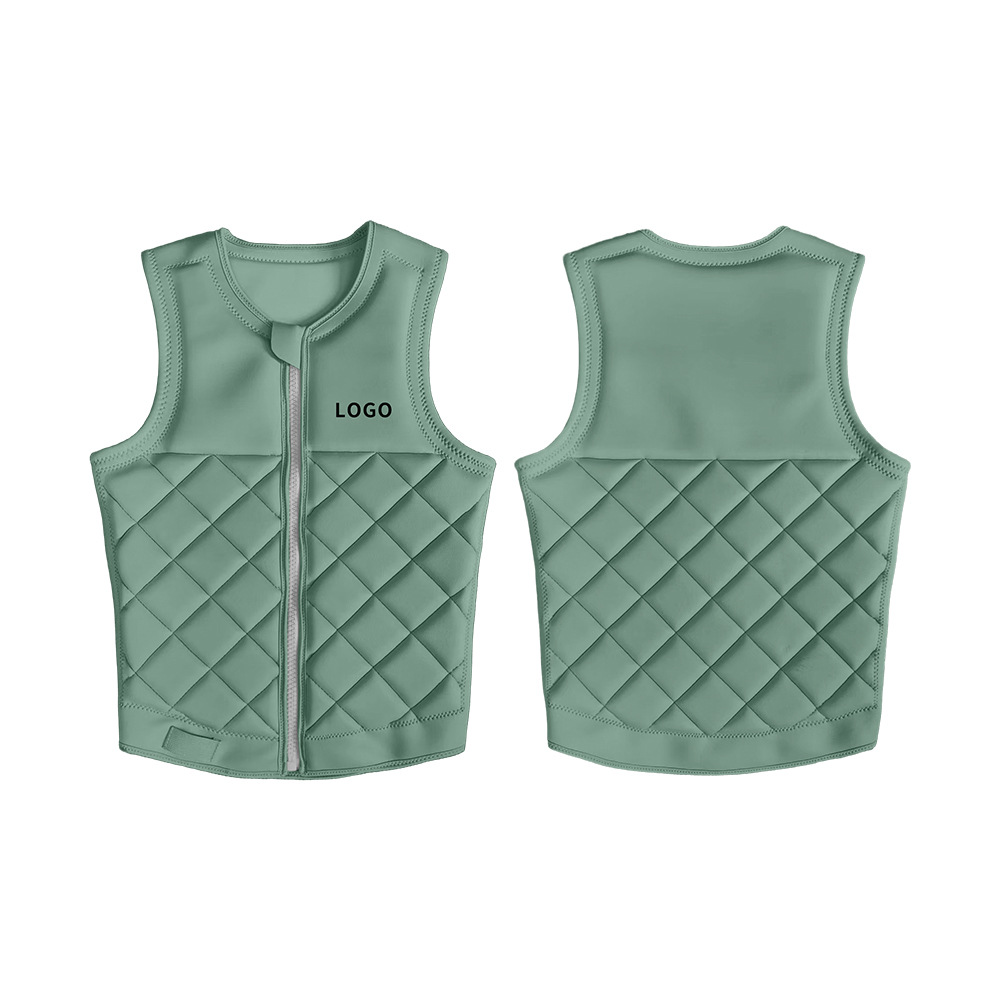
The higher price of PVC Foam life jackets is mainly due to the characteristics of the materials themselves, processing costs, and overall performance.
Here is a detailed comparative analysis:
Comparison Dimensions: Filler: PVC Foam; Filler: EPE Foam; Impact on Cost and Price
- Material Essence: PVC Foam: Essentially PVC plastic fiber, processed into a fluffy, Foam-like sheet material. EPE Foam: Essentially foamed polyethylene, a closed-cell foam plastic, usually cut into sheets or blocks. PVC Foamis a “fiber product,” while EPE is a “foam product.” Their raw materials and processes differ, with PVC Foam’s raw materials and production process typically being more complex.
- Processing and Filling: PVC Foam: Appears as fluffy or loose Foamsheets, with a soft texture and high plasticity. It can be evenly filled like Foam, providing excellent coverage and fit. After sewing, the garment is smooth, without bulging or discomfort. EPE Foam: A rigid or semi-rigid foam block/sheet. It requires precise cutting according to the pattern, and during filling, it’s “stuffed” into individual compartments, which can easily create seams and isn’t as soft and form-fitting. PVC Foamwins: PVC Foam’s filling process is closer to textile filling (like down jackets), allowing for more complex and better-fitting patterns. While labor and material costs are higher, the finished product is more comfortable.
- Comfort and Flexibility: PVC Foam: Very soft, lightweight, and form-fitting. Allows for free movement with minimal restriction on limb movement, providing a comfortable feel. EPE Foam: Relatively stiff, elastic, and bulky. Offers a noticeable “wrapping” and “bulging” feeling when worn, potentially causing friction and restriction during movement. PVC Foamwins: Pays a premium for “high comfort” and “flexibility.” This is a key value for life jackets that need to be worn for extended periods (such as work or sports).
- Buoyancy and Safety: PVC Foam: Also a closed-cell structure, it doesn’t absorb water. Buoyancy performance is comparable to EPE, both providing reliable buoyancy. EPE Foam: Excellent buoyancy performance, stable and reliable buoyancy per unit volume. Both are on par: Both meet the standards in providing basic buoyancy and impact protection. The core difference lies not in safety performance, but in user experience.
- Durability and Weather Resistance: PVC Foam: Good resistance to aging, corrosion, and low temperatures. Resilience is well maintained after long-term use and repeated compression. EPE Foam: Relatively poor aging resistance compared to PVC; after prolonged sun exposure or repeated pressure, resilience may decrease, it may become brittle and thinner. PVC Foamis slightly superior: The overall durability of PVC materials is generally considered slightly better than EPE, which increases its long-term value and justifies higher pricing.
- Appearance and Market Positioning: PVC Foam: Can be made into lighter, more fashionable, and more like ordinary clothing styles. Commonly used in high-end water sportswear, work clothes, fishing clothing, etc., combining aesthetics and functionality. EPE Foam: The appearance is usually more “industrial” and “tool-like,” appearing bulky. Commonly used in budget-friendly fishing boat life jackets and dock work vests. PVC Foamwins: PVC Foamlife jackets are often positioned in the mid-to-high-end market, and their design, brand, and target customers support a higher price.
Key Summary: Simply put, under the premise of “same style,” life jackets filled with PVC Foam are more expensive, mainly because:
- Higher material and manufacturing costs: The cost of PVC Foamitself and its filling and sewing processes is generally higher than that of cutting and filling EPE foam.
- Significant comfort premium: PVC Foamlife jackets offer a far superior experience in terms of softness, fit, flexibility, and lightness compared to EPE foam life jackets. For equipment that needs to be worn for extended periods, extremely high comfort is an important added value.
- Positioning and market-driven: Manufacturers often use PVC Foamto create a “high-end, comfortable product suitable for extended activities,” and their pricing naturally covers better materials, design, and target user groups.
Final Conclusion:
- If you prioritize ultimate cost-effectiveness and pure buoyancy, and don’t have high demands for wearing comfort, an EPE-filled life jacket is a practical choice.
- If you need to wear it for extended periods for work or sports on the water, highly value flexibility, comfort, and a close fit, and are willing to pay for a better experience, then a PVC-filled life jacket is worth the higher price.
This is similar to this: for the same Foam garment, a jacket filled with “premium down” is more expensive than one filled with “ordinary synthetic fiber Foam”; the core difference lies in the premium feel, comfort, and overall performance of the filling.
Leave A Comment