
People often have questions about surfboards when purchasing, using, and maintaining them. Below are some frequently asked questions from multiple perspectives to help you fully understand surfboards:
1. Surfboard Types and Selection
What are the differences between different types of surfboards?
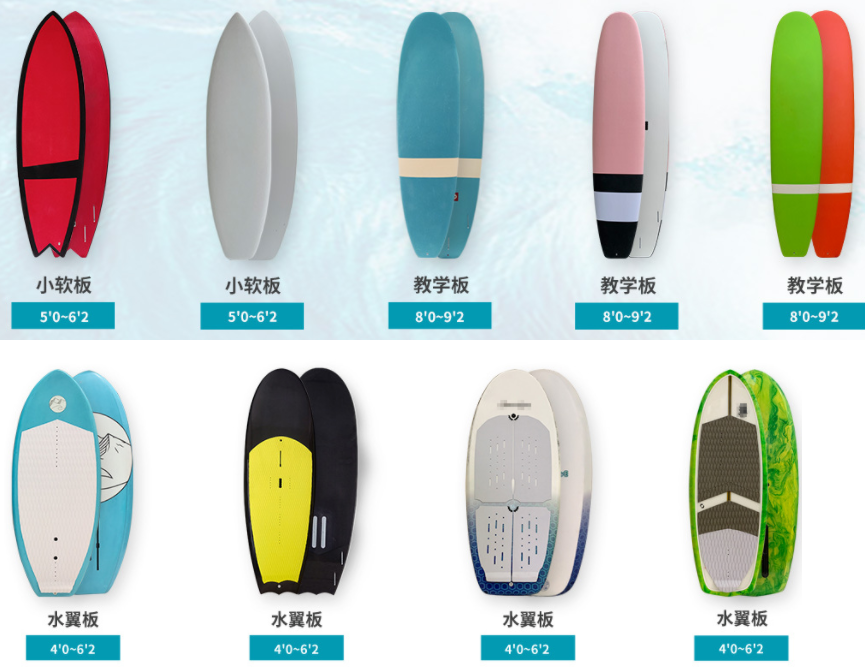
Common types include shortboards, longboards, foamboards, fishboards, and gunboards.
Shortboards: Flexible and fast, suitable for advanced surfers performing aerial maneuvers and surfing steeper waves.
Longboards: Stable and buoyant, suitable for beginners or traditional surfing techniques (such as boardwalking).
Foamboards: Made of softer material, offering increased safety and affordability, they are a popular choice for beginners.
Foamboards: Short and wide, suitable for surfers surfing smaller waves or those seeking speed.
How should I choose a surfboard size based on my height and weight?
Generally speaking, the heavier and taller you are, the longer and wider the surfboard you need to ensure adequate buoyancy. Beginners are advised to choose a board that is 30-60 cm longer than their height; advanced surfers can reduce the size based on wave conditions and desired maneuvers.
What type of surfboard is suitable for beginners?
Prioritize longboards or softboards. Both offer increased stability and forgivingness, helping beginners quickly master take-off and balance techniques. In terms of cost-effectiveness, softboards are more suitable for first-time surfers, while longboards are more suitable for those planning long-term learning.
II. Surfboard Structure and Accessories
What materials are used for surfboards? What are their advantages and disadvantages?
Foam (softboard): Lightweight, drop-resistant, and safe, but less durable and prone to wear and tear with long-term use.
Fiberglass + resin (hardboard): Highly rigid, fast, and durable, but also heavier, more expensive, and easily damaged in collisions (requires careful maintenance).
Epoxy resin (hardboard): Lighter and stronger than fiberglass, with slightly greater buoyancy, suitable for surfers of all levels, but more expensive.
What is the function of the “fins” on a surfboard? What are the differences between different fin types?
Fins are the “rudder” of a surfboard, providing stability and steering control. Common fin types include:
Single fin: Suitable for longboards, with low steering flexibility but high stability, suitable for traditional surfing styles.
Thruster fin: Commonly used on shortboards, with a central main fin for stability and two side fins for enhanced steering, suitable for a variety of wave conditions and maneuvers.
Five fins: Adjustable to wave conditions (e.g., split into three or four fins), more adaptable, suitable for advanced surfers.
What accessories do I need for my surfboard?
Essential accessories include:
Leash: Connects the surfboard to your ankles to prevent the board from being swept away by waves and ensure safety.
Deck grip: Attaches to the board to increase foot-to-board friction and prevent slipping.
Deck bag: Protects the board during transport or storage to prevent bumps.
Wax: Increases board traction (commonly used on hardboards; softboards often have a built-in anti-slip coating and do not require waxing).
III. Surfboard Use and Care
How should I wax my surfboard before surfing? What are some tips?
Hardboards require waxing to enhance their slip resistance:
First, clean the board with warm water to remove dust and oil.
Choose the type of wax (cold water wax, warm water wax, tropical wax) based on the water temperature to prevent the wax from melting or hardening in the water.
Apply a base coat of wax evenly in circular motions, then apply a top coat using a “grid” motion to increase friction.
Note: After surfing, rinse the board with clean water to remove sand and salt to prevent contamination of the wax.
How can I store my surfboard to extend its life?
Avoid prolonged exposure to sunlight; high temperatures can cause the board to warp and degrade the material.
Store it upright (using a dedicated stand) or flat, avoiding stacking heavy objects to prevent pressure and deformation.
After surfing, rinse with fresh water immediately to remove salt (long-term salt residue can corrode the material), and dry it before storing.
Avoid folding a softboard when storing to prevent cracking at the creases.
How can I repair a scratched or damaged surfboard?
Minor scratches: If they don’t damage the internal material, ignore them or fill them with special wax.
Fiberglass board damage: Sand the damaged area with sandpaper, apply resin and fiberglass cloth, and after curing, sand it down smooth. (Minor damage can be repaired yourself, but larger damage is recommended.)
Soft board damage: Apply special soft board glue to the crack, press firmly, and wait for it to dry.
IV. Other FAQs
What is the price range for surfboards?
Prices vary widely: soft boards typically range from 500 to 2000 yuan; entry-level hard boards (fiberglass) range from 2000 to 5000 yuan; professional-grade hard boards (epoxy resin, custom-made) range from 5000 to 20,000 yuan or more. Beginners can rent a board to experience it first, then purchase based on their needs.
Can I take a surfboard on an airplane?
Yes, but it must be checked as oversized baggage, and some airlines charge an additional fee (it’s recommended to inquire in advance). Always use a protective bag during transportation to prevent damage. What’s the difference between children’s surfboards and adult boards?
Children’s boards are smaller (typically 1.2-1.5 meters), made of lighter and more flexible materials (mostly softboards), safer, and designed to better suit children’s height and strength requirements.
Understanding these issues can help you choose, use, and maintain a surfboard more effectively, saving you time and money, whether you’re just getting started or becoming an advanced surfer.


Leave A Comment