

Classifications of Surfboards
By Purpose
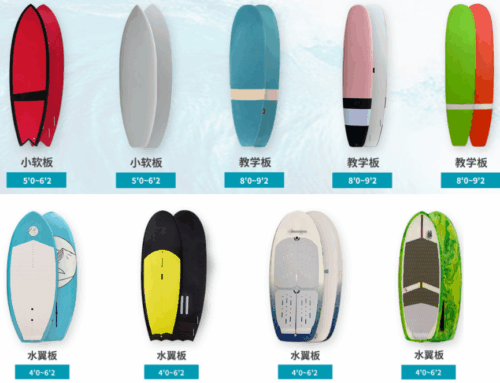
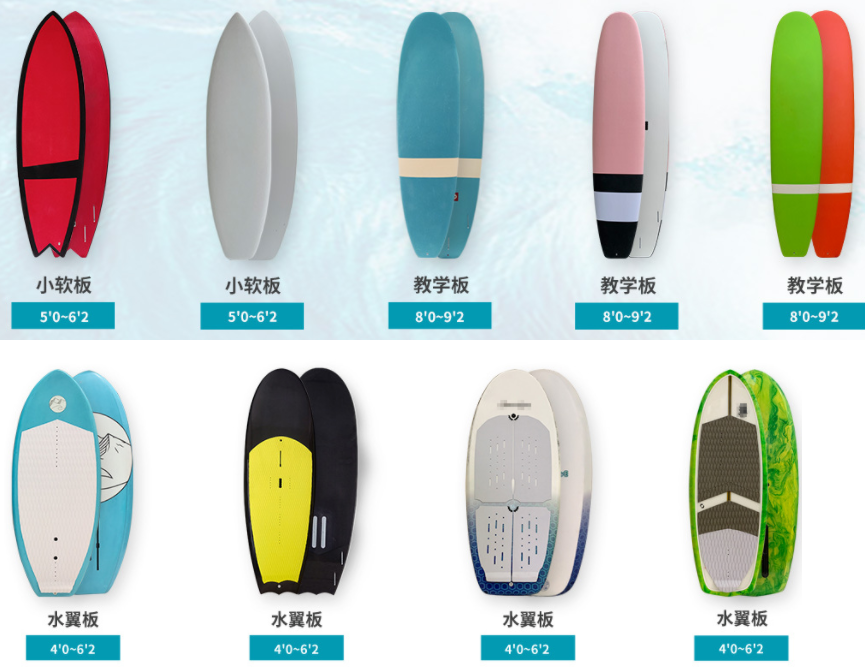
- Longboard: Longer than 2.9 meters with a semicircular nose. It has great buoyancy and a relatively slow speed, making it suitable for small waves. Beginners can easily practice basic skills like paddling and take-off on it, as it offers stable gliding in gentle wave areas.
- Shortboard: Shorter than 2.3 meters with a sharp triangular nose. It has low buoyancy and extremely flexible steering, allowing for various difficult tricks. However, it requires larger and well-formed waves to perform at its best, so it is more suitable for skilled surfers.
- The Gun (Big Wave Board): Narrow and long, with a length close to that of a longboard but sharp at both ends. Designed to handle big waves in places like Hawaii, it is fast and helps surfers glide quickly and stably in big waves, typically used for waves between 10 and 30 feet, only by experienced surfers who can handle big waves.
- The Fish: A variant of the shortboard, ranging from 5.6 to 6.11 feet in length, usually wider and thicker than the shortboard. Due to its slightly greater buoyancy, it is easier to use than the shortboard in small waves and has certain flexibility, suitable for use in areas with small waves, favored by surfers who want a good experience in small wave environments.
- Float Valve Board: With a relatively wide surface, it has good stability on the water, but the speed change is relatively slow. It is suitable for beginners to use in relatively calm waters, helping them maintain balance when practicing basic surfing moves.
By Combination with Paddleboard
- Wave Paddleboard: Usually shorter than leisure paddleboards but wider than surfboards, it combines the flexibility of surfboards and the stability of paddleboards. It can glide with waves like traditional surfboards and move on the water by paddling, suitable for enthusiasts with certain surfing basics who want to try water sports in different waters and wave conditions.
By Skill Level
- Beginner Board: Generally has high buoyancy and stability, with a relatively large size and wide surface. In terms of material, it may tend to use lightweight and durable materials like EPS, helping beginners paddle, take off and maintain balance more easily, and reducing frustration during learning.
- Advanced Board: As surfers’ skills improve, they have higher requirements for board performance. Advanced boards, while ensuring certain stability, enhance flexibility and speed. For example, their shape design is more in line with fluid mechanics, and the material selection may adopt lighter and high-strength material combinations to meet surfers’ needs for more complex moves in different wave conditions.
Leave A Comment