
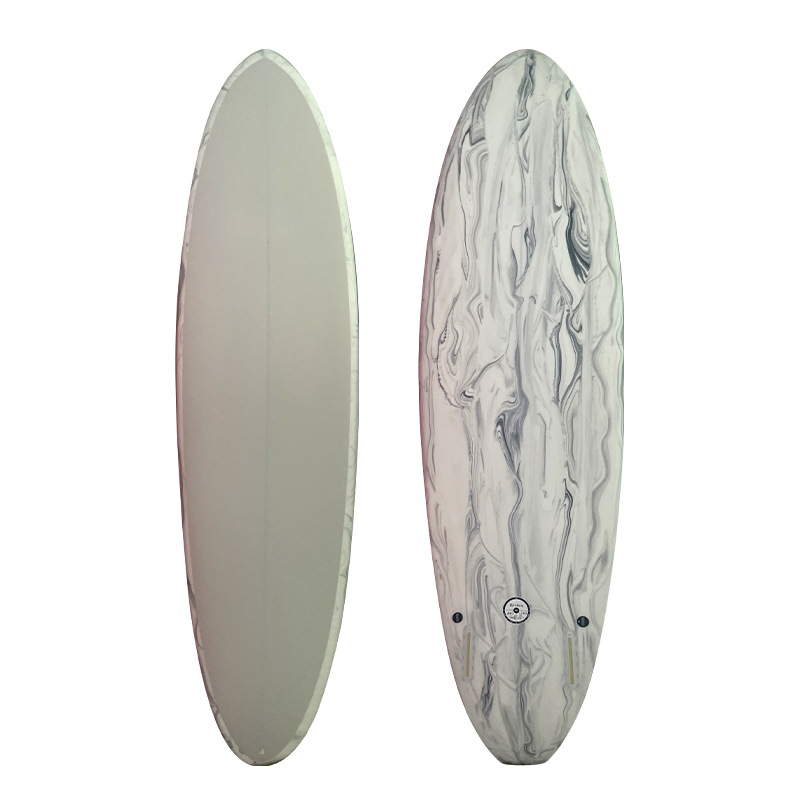
Overseas, the use of EPS (expanded polystyrene) and PU (polyurethane) surfboards is influenced by a variety of factors, and there’s no definitive conclusion on which is more popular.
Market data indicates that the EPS surfboard market is growing rapidly. According to statistics, the global EPS surfboard market was approximately $1 billion in 2018 and is projected to reach $1.5 billion by 2025, with a compound annual growth rate of approximately 5%. In the United States, a major region for surfing, the EPS surfboard market has grown by approximately 7% over the past five years, reaching $250 million. In major markets such as North America, Europe, and Asia, EPS surfboards have gradually gained market share due to their advantages. North America holds a significant share of the global market, reaching approximately $400 million in 2019, representing 27% of the global market. This is due to the region’s large community of surfing enthusiasts and mature surfing culture.
The advantages of EPS surfboards have made them popular among many consumers. Lighter and more buoyant, EPS surfboards make it easier for beginners to paddle and catch waves, while also reducing the impact and damage from collisions. Furthermore, EPS surfboards are stronger, less susceptible to dents and damage, and have a long lifespan. They are also more environmentally friendly and recyclable. For example, EPS surfboards are common in surf schools and beginner rentals because their characteristics better meet the needs of beginners, reducing learning costs and the risk of injury.
PU surfboards also have their loyal following. PU surfboards are a traditional surfboard material with excellent elasticity, providing a unique feel and relatively fast response. Despite its drawbacks such as water absorption, yellowing, peeling, cracking, and rapid aging, as well as its environmental impact, PU surfboards remain a favorite for intermediate and advanced surfers who value the feel of a traditional surfboard and have advanced skills. PU surfboards can also be seen in professional surfing competitions, as competitors can better harness the board’s characteristics and perform more acrobatic maneuvers on the waves.
In general, EPS surfboards are used more frequently among casual surfers and beginners due to their many entry-level features. However, PU surfboards are still widely used in professional surfing and among some experienced surfers who pursue a specific feel.


Leave A Comment