
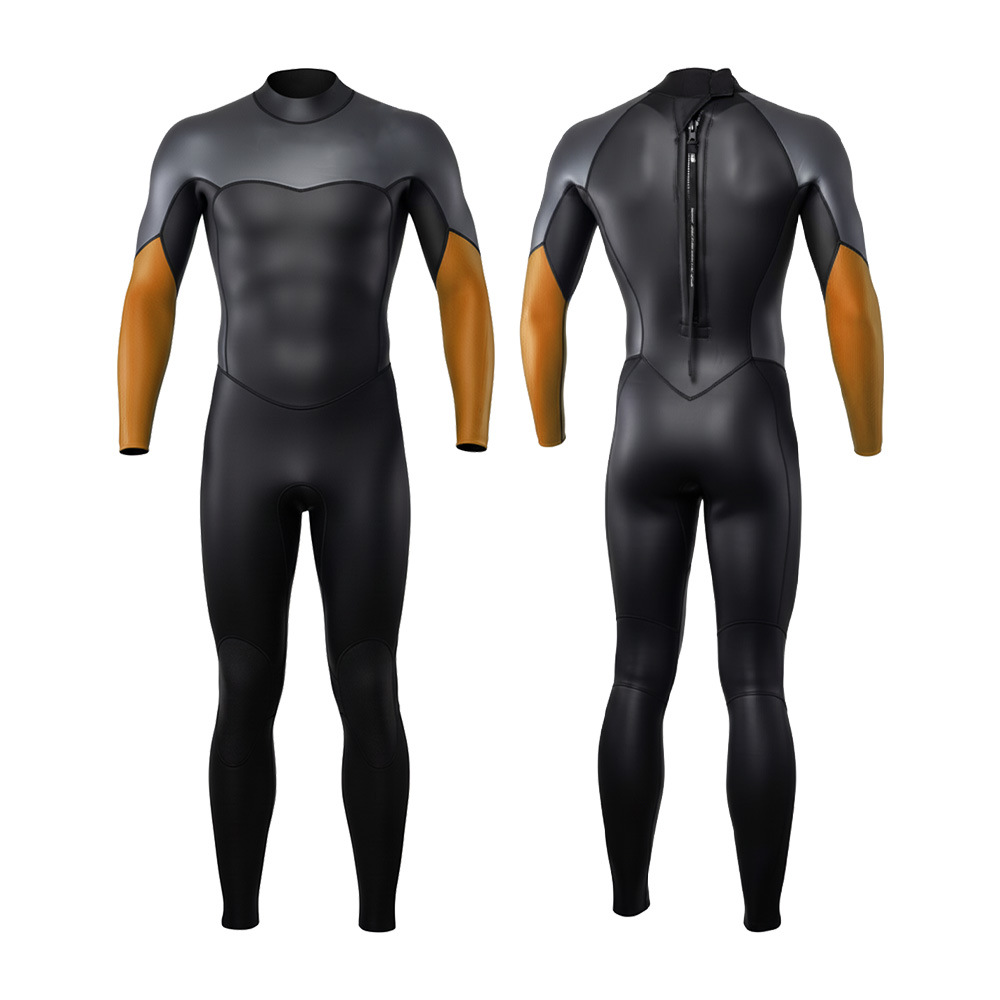
Wetsuits are mainly classified according to their material, structure (thickness and cut), and purpose. Here’s a detailed classification:
I. Classification by Material and Structure (This is the most fundamental classification)
1. Wet Suit
This is the most common type of wetsuit, suitable for most recreational diving and water sports.
• Principle: Allows a small amount of water to enter between the wetsuit and the body. The body’s heat quickly heats this thin layer of water, forming an insulating layer and reducing heat loss.
• Materials:
◦ Foamed Neoprene: The most traditional and common material, containing tiny nitrogen bubbles that provide good buoyancy and insulation. Available in different elasticity and quality grades (e.g., standard, super stretch, ultra-soft, etc.).
◦ Spandex/Neoprene Composite Fabric: The surface is nylon or polyester fiber, the middle is neoprene rubber, and the lining is super-elastic spandex. More durable, more form-fitting, and with excellent elasticity, it is currently the mainstream material for mid-to-high-end products.
• Advantages: High flexibility, cost-effectiveness, and wide applicability.
• Disadvantages: Limited insulation; requires a thicker style for extremely cold water.
2. Semi-dry suit
Can be considered an “enhanced” version of a wetsuit, suitable for environments with lower water temperatures (e.g., 10-20°C).
• Principle: Minimizes water entry and exit through a more airtight design (e.g., high collar, wrist/ankle seals, waterproof zippers), maintaining internal water temperature.
• Features: Generally warmer than a wetsuit of the same thickness, but more difficult to put on and take off, and more expensive.
3. Drysuit
Designed for cold water (usually below 15°C) or long-duration dives, essential equipment for technical diving, wreck diving, and ice diving.
• Principle: Completely waterproof, keeping water completely out of the suit. Divers need to wear thermal underwear (e.g., fleece, wool, or specially designed electrically heated clothing).
• Materials:
◦ Trilaminar material: such as nylon composite rubber (trilaminate), lightweight and elastic.
◦ Heavy-duty rubber: such as neoprene or foam neoprene, with some insulation, more durable but heavier.
• Key components: Features a fully sealed waterproof zipper, neck and wrist closures (usually made of silicone or latex), and an inflation/deflation valve for filling with gas (usually air) during diving to balance water pressure and adjust buoyancy.
• Advantages: Provides the strongest insulation; divers can adjust the thickness of their underwear according to water temperature.
• Disadvantages: Expensive; requires specialized training for safe use; complex to put on and take off.
——
II. Classification by Thickness and Cut
1. Thickness
Wet/semi-dry wetsuits are usually measured in millimeters. Common combinations are as follows:
• 1-3mm: Tropical waters (above 26°C), used for sun protection, abrasion protection, and also for surfing and snorkeling.
• 3-5mm: Warm waters (20-26°C), the most common thickness for recreational diving.
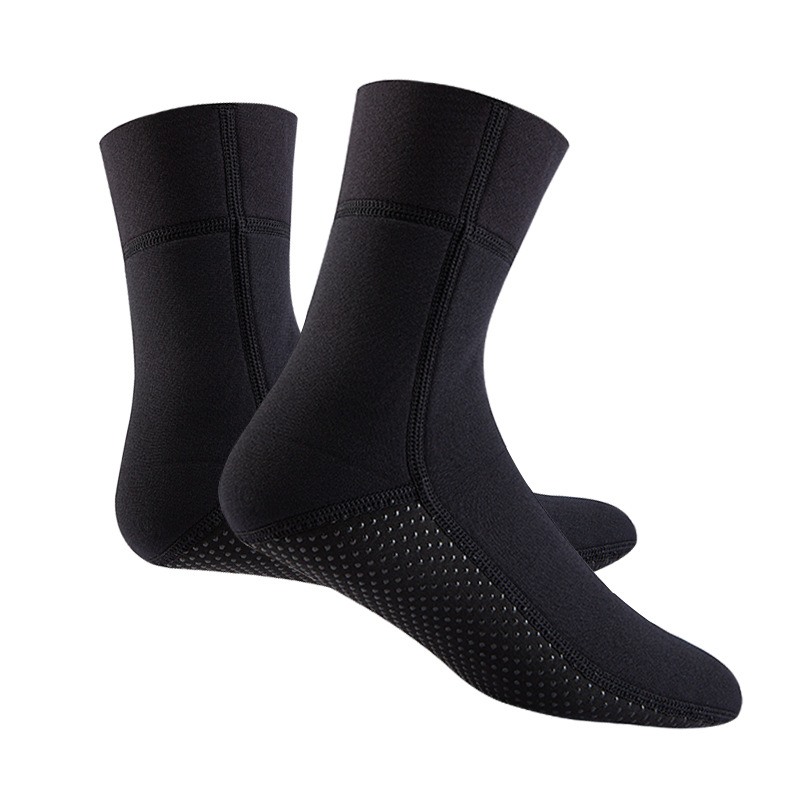
• 5-7mm or 7mm: Cold waters (10-20°C), typically paired with a hood, gloves, and diving boots.
• 8mm and above: Mostly two-piece (vest + pants) or reinforced with lining, for cold water.
2. Cutting and Craftsmanship
• Plain seam: Seams are sewn directly together, leaving needle holes, allowing slight water seepage. Common in lower-end or thicker styles.
• Blind seam/adhesive seam: Seams are glued together before sewing, with stitches not penetrating the inner layer, greatly reducing water seepage. The most common mid-range technique.
• Liquid-tight/seamless bonding: The highest level of craftsmanship, where seams are completely sealed with special adhesive strips, making it virtually completely waterproof. Standard technique for high-end wetsuits and all drysuits.
——
III. Classification by Special Purpose and Design
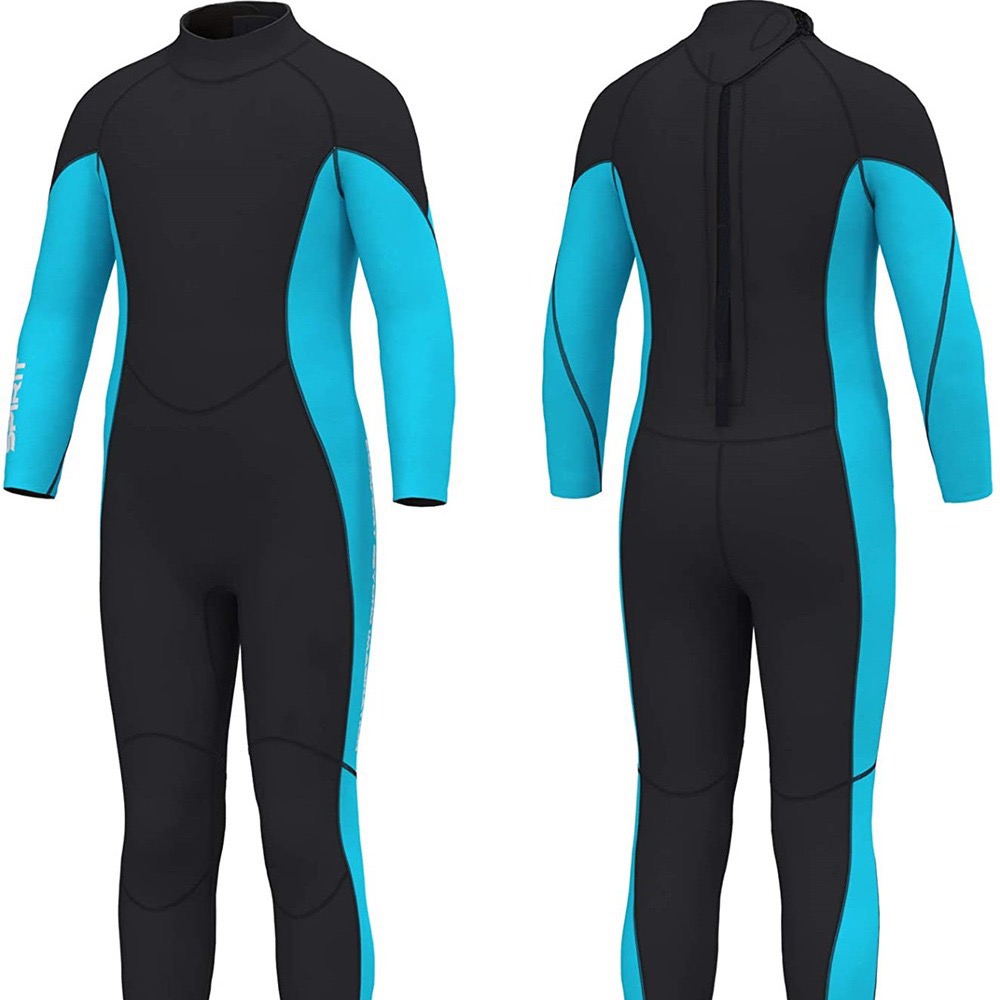
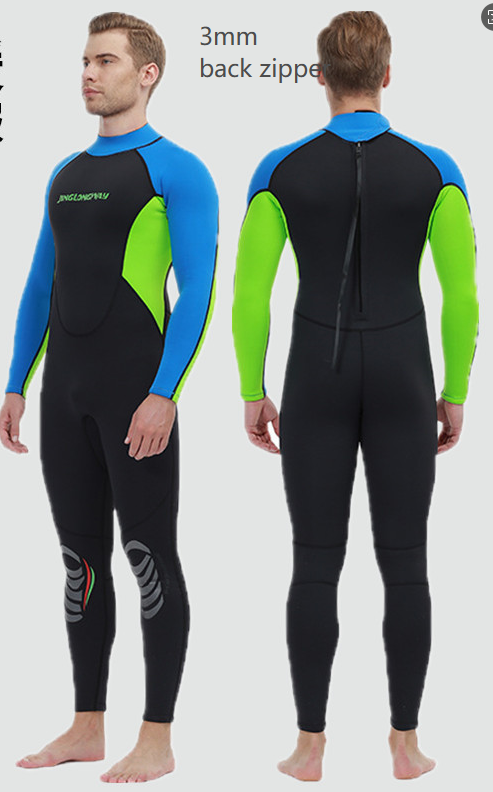
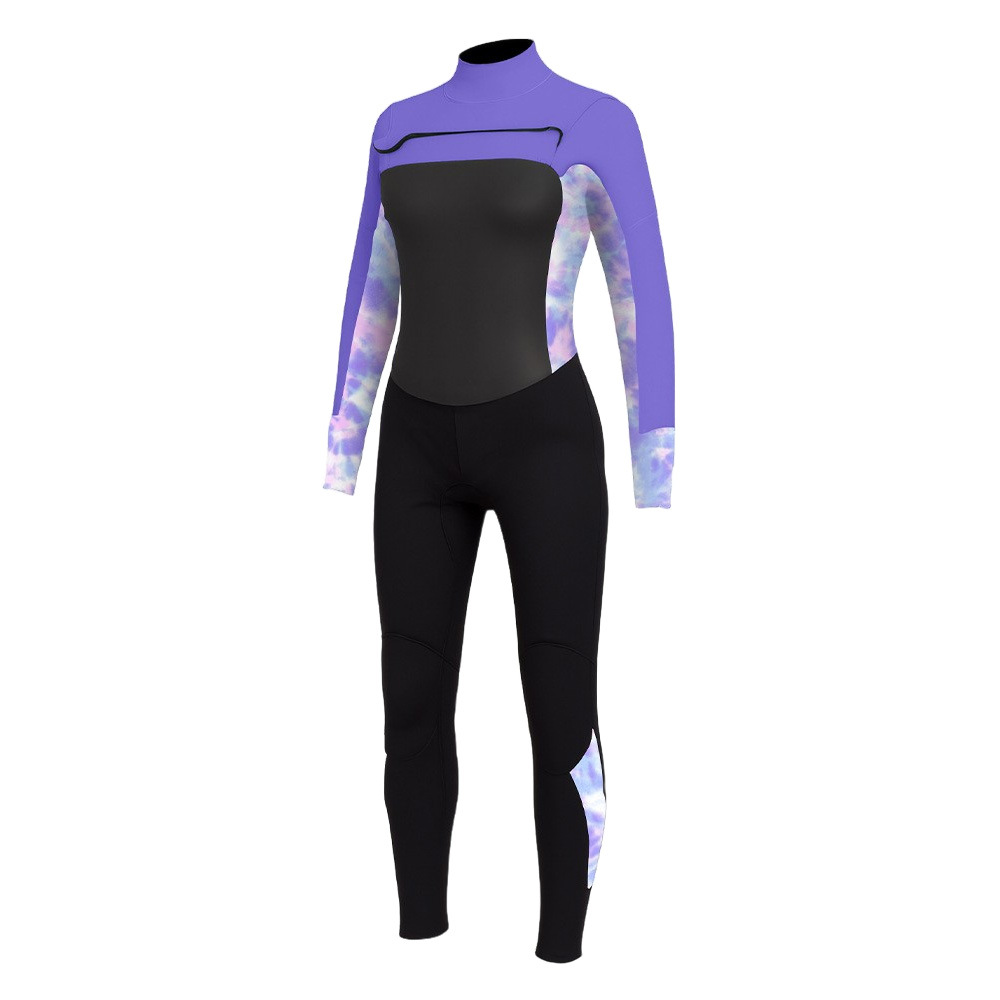
1. Full-body suit: The most common, covering the torso and limbs.
2. Short-sleeved/short-length suit: Also known as a “short wetsuit,” used in the warmest waters or for water sports, easy to put on and take off and move around in.
3. Two-piece suit: The top and bottom are separate, making it easier to put on and take off, and providing better warmth (two layers), commonly seen in wetsuits and drysuits in colder waters.
4. Baffle suit: The head is integrated with the top, reducing heat loss from the neck and providing better warmth.
5. Custom-made wetsuit: Tailored to individual body measurements, providing optimal fit and warmth, often a high-end choice.
Summary and Selection Recommendations
Type | Suitable Water Temperature | Main Use | Key Features
Wetsuit | 10°C – 30°C+ | Recreational diving, snorkeling, freediving, surfing | Water-insulating, elastic, cost-effective
Semi-drysuit | 10°C – 20°C | Cold water recreational diving | Restricts water flow, better insulation than wetsuits of the same thickness
Drysuit | Below 15°C | Cold water/ice diving, technical diving, long-duration diving | Completely waterproof, can be worn with thermal underwear, training required
How to Choose:
• Consider water temperature: This is the decisive factor.
• Consider activity: Choose a wetsuit for recreational diving, a drysuit for professional cold water/technical diving.
• Consider fit: A wetsuit must fit perfectly; too loose and cold water will keep getting in, too tight and it will affect blood circulation and comfort.
• Consider budget: Prices range greatly from ordinary wetsuits to high-end custom drysuits.
Hopefully, this detailed classification will help you fully understand the types of wetsuits!

Leave A Comment