
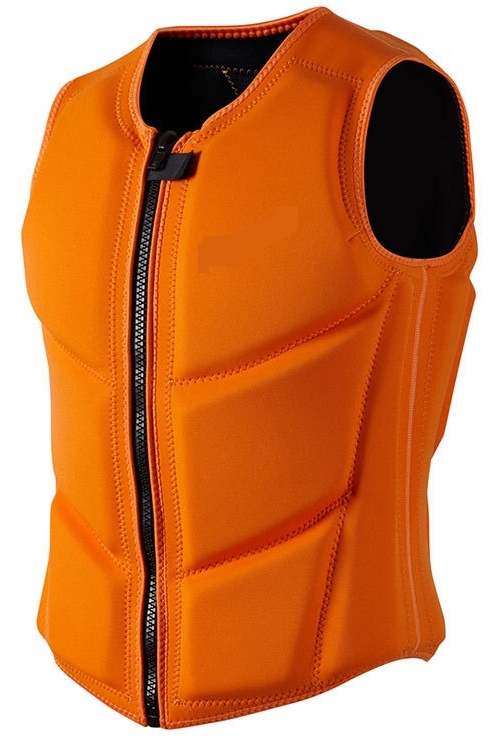
EN ISO 12402 is a European standard test for personal flotation devices, mainly used to ensure that various personal flotation devices can provide adequate safety protection for users during water activities. The specific information is as follows: – **Standard composition** – **EN ISO 12402-2**: Specifies the safety requirements for performance level 275 life jackets, suitable for adults and children, mainly used for offshore operations under extreme conditions, etc., requiring the buoyancy of ordinary adults to be no less than 275N. – **EN ISO 12402-3**: For performance level 150 life jackets, suitable for adults of average height and weight, which can transfer unconscious people to a safe floating position. – **EN ISO 12402-4**: Involving performance level 100 life jackets, suitable for adults of average height and weight swimming in sheltered waters and open waters. – **EN ISO 12402-5**: Specifies safety requirements for swimming equipment with a buoyancy of at least 50N, suitable for swimmers close to shore or for those who are easily accessible to help and rescue. – **EN ISO 12402-6**: Describes safety requirements and additional test methods for special purpose lifejackets and buoyancy aids. – **EN ISO 12402-7**: Specifies safety requirements and test methods for materials and components of personal flotation devices. – **EN ISO 12402-8**: Specifies safety requirements and test methods for accessories of personal flotation devices. – **EN ISO 12402-9**: Provides test methods for personal flotation devices, including sampling, adjustment, mechanical properties and human performance tests. – **Test content** – **Buoyancy test**: Fill the device with air and place it in the water, and measure the required sinking force to ensure that it meets the specified minimum buoyancy requirements. – **Material and construction
testing**: Materials are tested for tension, compression and tearing, and stitching and bonding processes are tested for strength to ensure they can withstand the expected use and environmental conditions. – **Size and fit testing**: Devices of different sizes and types are tested to ensure they can accommodate users of different weights and body shapes.
– **Comfort and fit testing**: Wear tests are performed to evaluate the comfort and user satisfaction of the device. – **Durability testing**: Devices are exposed to different temperatures and water environments to test their performance over the expected period of use. – **User guide and label inspection**: Check for clear, durable markings and user guides with information such as model, size, manufacturing date, certification marks, etc.
Leave A Comment