
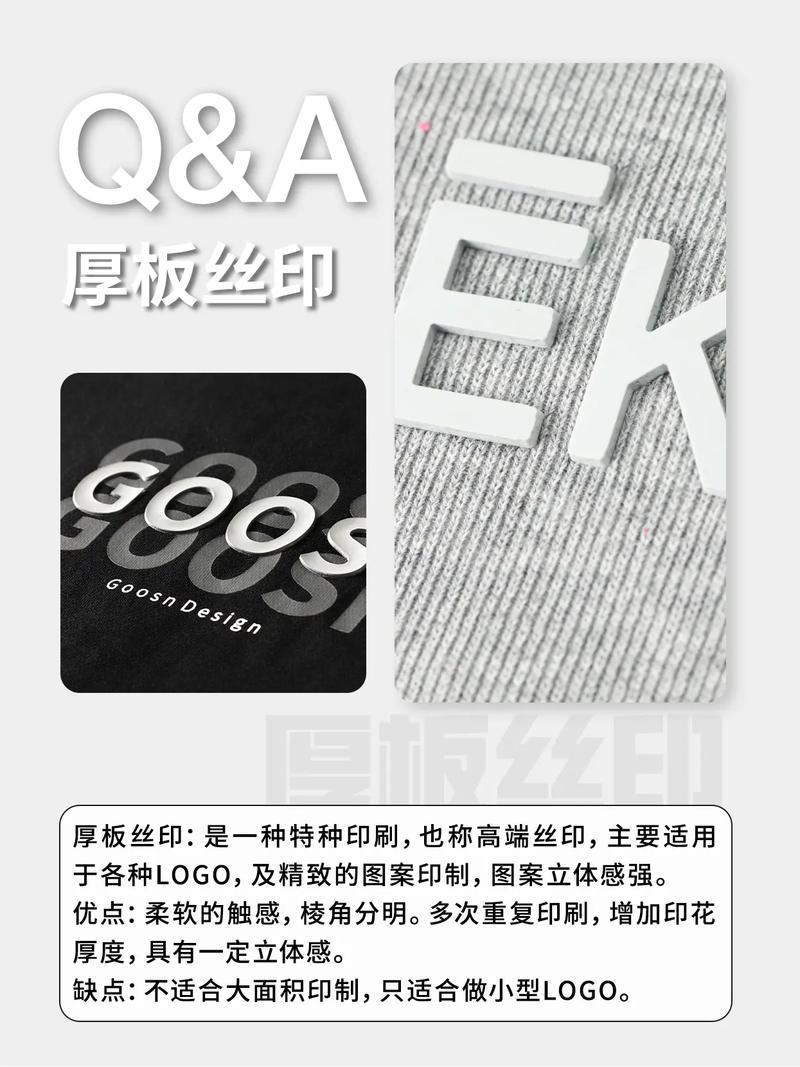
To choose the type suitable for the logo printing of diving suits, you need to consider factors such as brand positioning, usage scenarios, budget cost, material adaptability, etc. The following is a specific selection guide to help you quickly find the best solution:
- Choose according to brand positioning and design requirements
- High-end professional brands: pursue texture and durability
Recommended crafts:
Embroidery: Three-dimensional silk thread improves the grade, suitable for small-area logos (such as chest and cuffs), wear-resistant and washable, and not easily damaged by long-term use.
Laser engraving: Directly burn permanent patterns on materials such as neoprene, without the risk of falling off, suitable for minimalist line design, highlighting high-end tone.
Silicone printing: The raised silicone logo has both anti-slip function (such as shoulders and waist), suitable for professional diving equipment, and enhances functionality and recognition.
Avoid pit points: Avoid hot stamping/hot silver, metal foil is easy to wear, which is inconsistent with high-end positioning.
- Trendy fast-moving consumer goods brands: Emphasis on visual impact and creativity
Recommended technology:
Digital direct printing: Supports photo-level complex patterns and gradient colors, suitable for large-area printing or personalized design (such as full-body graffiti style logo), and quickly responds to fashion trends.
Heat transfer: Accurately restore multi-color design, the pattern is light and breathable, suitable for summer diving suits or fast fashion series.
Avoid pits: Avoid embroidery, complex patterns are costly and time-consuming, and are not suitable for high-frequency fast-moving consumer goods models.
- Mass practical brands: Balance cost-effectiveness and durability
Recommended technology:
Screen printing: Single-color or two-color logos are low-cost, suitable for mass production (such as team customization, event gifts), and the first choice for basic diving suits.
Heat transfer: Multi-color patterns are more cost-effective than digital direct printing, suitable for daily models that require medium-complexity designs.
Avoid pits: Avoid laser engraving, the process cost is high, and the premium for the mass market is not obvious.
- Choose according to usage scenarios and functional requirements
- High-frequency washing/outdoor scenes (such as professional diving and rescue equipment)
Core requirements: water-resistant, friction-resistant, and not easy to fall off.
Recommended process:
Thermal transfer: The pattern is tightly combined with the fabric, and it is not easy to crack after washing, which is better than screen printing.
Embroidery: The silk thread is strong and suitable for long-term high-frequency use, but it needs to avoid joint activity parts (such as armpits and elbows).
Avoid pit points: Avoid hot stamping/hot silver, which is easy to fall off after soaking in water; silicone printing needs to be tested for hydrolysis resistance (some silicone may harden after long-term soaking in water).
- Low-intensity leisure scenes (such as snorkeling, water entertainment)
Core requirements: beautiful, light, and cost-controlled.
Recommended process:
Screen printing: The basic logo is durable enough to meet short-term use needs (such as travel rental equipment).
Digital direct printing: Suitable for one-time activities or limited editions (such as theme party diving suits), flexible design and no need for plate making.
Pitfalls: No need to choose high-cost processes (such as laser engraving and embroidery), which are not cost-effective.
- Special functional requirements (such as night identification and anti-slip)
Recommended processes:
Hot stamping/silver stamping: The metallic luster improves nighttime recognition (such as the reflective strip area of a life jacket), but only in non-friction areas.
Silicone printing: Printing silicone logos on cuffs, collars, etc. to increase friction and prevent slipping, suitable for children’s diving suits or equipment that needs to be grasped.
Pitfalls: Functional areas give priority to the compatibility of processes and materials (such as silicone needs to be firmly bonded to neoprene).
- Choose according to budget and production scale
- Small batch customization/sample testing (≤100 pieces)
Recommended processes:
Digital direct printing: No plate making fee, low unit cost, suitable for rapid verification of design effects.
Heat transfer: The plate making fee is lower than screen printing, and the cost of multi-color patterns is controllable.
Cost reference: Digital direct printing is about $5-$15/piece, thermal transfer is about $8-$20/piece (including design fee).
- Mass production (≥500 pieces)
Recommended process:
Screen printing: The cost of a single-color logo can be as low as $1-$3 per piece, which is suitable for standardized products.
Thermal transfer: After the plate-making fee is shared by multi-color patterns, the cost per piece is about $3-$8, which is more cost-effective than digital direct printing.
Cost reference: The mass production cost of screen printing single-color logo can be controlled at $1000-$2000 (including plate-making).
- High-end limited edition (≤50 pieces)
Recommended process:
Laser engraving: The cost per piece is $50-$100, suitable for brand anniversary or joint models, highlighting uniqueness.
Embroidery + hot stamping combination: The mixed process enhances the texture, the cost is $30-$80/piece, suitable for high-premium products.
Cost reference: Laser engraving requires special equipment, and it is recommended to outsource to professional manufacturers to avoid waste from self-built production lines.
- Choose according to the adaptability of diving suit materials
Fabric type Recommended printing process Avoided process Reason explanation
Neoprene (Neoprene) Laser engraving, silicone printing, thermal transfer Screen printing (thick slurry is prone to cracking) Neoprene has high elasticity, and a process with good ductility needs to be selected. Laser engraving directly destroys the surface of the material and is more solid.
Nylon/Polyester (Nylon/Polyester) Digital direct injection, screen printing, embroidery Hot stamping/hot silver (poor adhesion) The surface of the fabric is smooth, and the digital direct injection ink penetrates more evenly. When embroidering, pay attention to the needle distance to avoid tearing the fabric.
Elastic spandex (Spandex) Thermal transfer, silicone printing Laser engraving (easy to melt) Spandex is easy to deform at high temperature, thermal transfer and low temperature pressing are safer, and silicone printing can stretch with the fabric without deformation.
- Practical Guide to Avoiding Pitfalls
Test first:
No matter which process you choose, you need to make 1-2 samples first to test the color fastness after 5 washes, whether the pattern cracks when the fabric is stretched, and whether it rubs against the skin when worn (such as whether the thread ends on the back of the embroidery are itchy).
Pay attention to environmental protection requirements:
For export to the European and American markets, you need to choose OEKO-TEX certified inks (such as water-based inks for digital direct injection) to avoid excessive chemical substances.
Technology combination innovation:
For example, “screen printing base color + embroidery logo” enhances the sense of hierarchy, or “thermal transfer pattern + silicone anti-slip points” takes into account both beauty and function.
Summary: Quick decision-making formula
Limited budget + large quantity + simple design → screen printing
High-end texture + small area logo → embroidery / laser engraving
Complex pattern + personalization → digital direct printing
Functional requirements (anti-slip / reflective) → silicone printing / hot stamping
Elastic fabrics (such as neoprene) → priority heat transfer / laser engraving
By cross-matching the above dimensions, you can efficiently select the most suitable wetsuit logo printing process.

Leave A Comment